
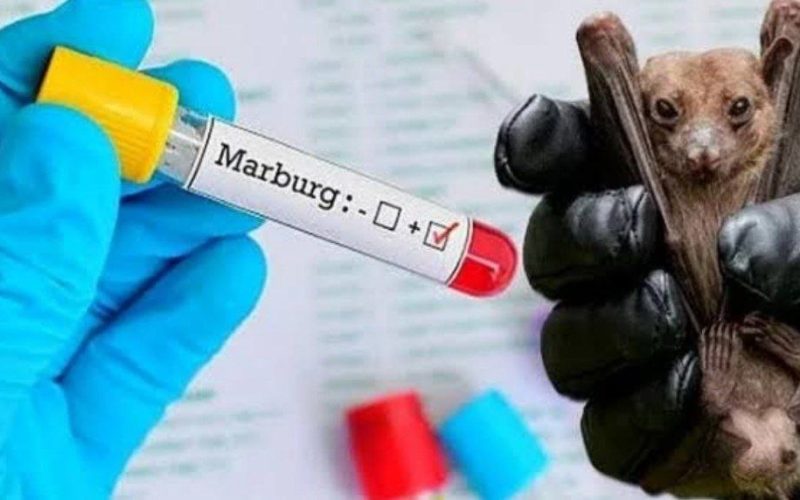
Ethiopia Reports Four Marburg Deaths, Limits Body Handling
Ethiopia’s Ministry of Health has announced that bodies of Marburg virus victims will not be handed over to families for traditional burial, citing the high risk of infection through direct contact.
Health officials stressed that the deceased will not be washed, and burials will be carried out exclusively by trained professionals using strict safety protocols.
Authorities additionally advised that areas where burials take place must be closely monitored and protected to prevent community exposure.
The ministry urged the public to cooperate and understand the seriousness of the outbreak, noting that cultural practices must be adjusted to save lives.
The Ministry of Health’s statement followed an awareness session held for media professionals in Addis Ababa in collaboration with the Ethiopian Public Health Institute (EPHI).
Officials also clarified public misconceptions about the virus, stressing that Marburg is not airborne, unlike COVID-19.
Transmission occurs only through direct contact with bodily fluids, including sweat, blood, vomit, or semen of an infected person or corpse.
Health experts warned that the virus may remain in male semen for up to one year, advising survivors to avoid unprotected or casual sexual activity.
However, officials also emphasized that a patient who receives proper monitoring and treatment cannot transmit the disease.
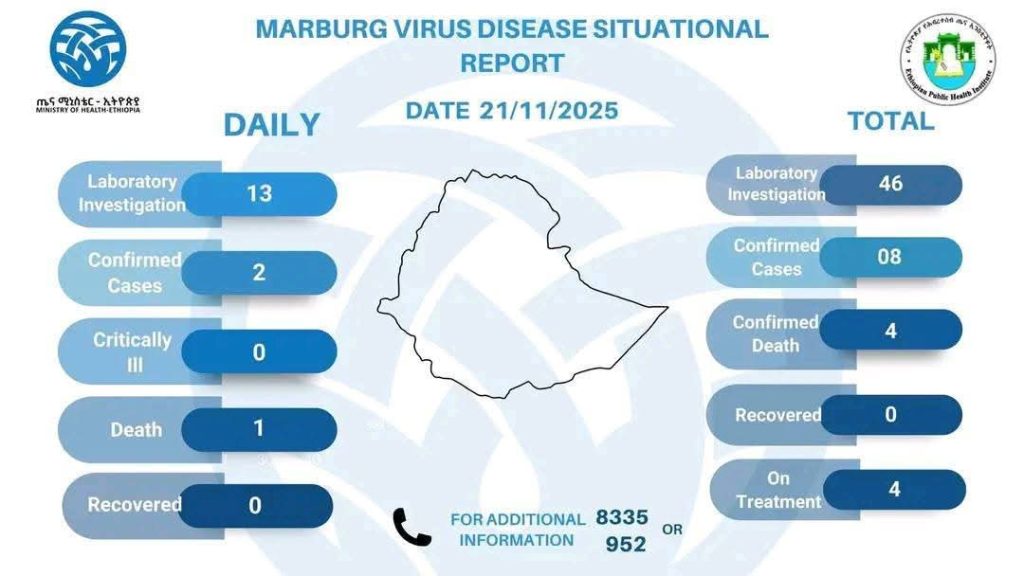
According to the latest situational report dated 21 November 2025, Ethiopia has conducted 46 laboratory investigations since the outbreak and confirmed eight cases, of which four have resulted in death, while the remaining four patients remain under treatment. No recoveries have been reported so far.
The outbreak was genetically confirmed by the Ministry of Health and EPHI, identifying the hemorrhagic fever detected in Southern Ethiopia as Marburg virus disease.
Officials further warned that although the virus is not airborne, it is more deadly than COVID-19, with a fatality rate ranging from 24% to 88%, depending on the outbreak and treatment conditions.
Experts reiterated that regular handwashing, avoiding contact with sick individuals, and reporting suspected symptoms are critical to preventing further spread.
While drugs and vaccines for Marburg are under clinical trial internationally, Ethiopia cannot import them until regulatory approvals are completed.
Marburg virus was first identified in Germany in 1967 and has since been recorded in at least 12 countries, with recent outbreaks reported in Ghana, Equatorial Guinea, Tanzania, and Rwanda. Ethiopia has now joined the list of affected African nations.
