
Ethiopian Investment Commission Says Sudden Legal Changes and Security Issues Hinder Investment
The Ethiopian Investment Commission (EIC) has informed lawmakers that unpredictable regulatory changes and ongoing security challenges are discouraging both foreign and domestic investors.
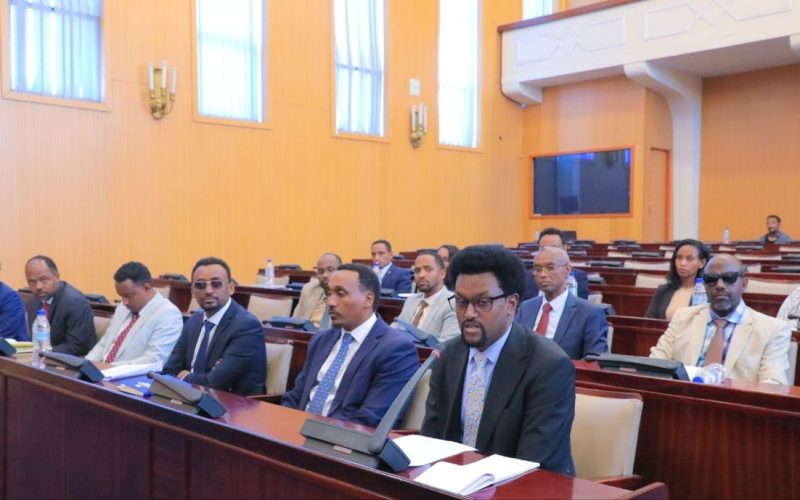
Presenting the Commission’s first-quarter performance report to the House of People’s Representatives Standing Committee on Trade and Tourism, EIC Commissioner Zeleke Temesgen said that instability and abrupt shifts in investment laws continue to hinder capital inflow and slow overall investment growth in the country.
According to the Commissioner, Ethiopia had planned to substitute $400 million worth of imported goods with locally produced products during the past three months.
However, only $211 million equivalent to 53 percent of the target was achieved.
Zeleke explained that while the government is working to boost local manufacturing, both security issues and unpredictable regulatory changes are hampering import substitution efforts and limiting the country’s ability to reduce reliance on foreign goods.
The Commissioner also reported enforcement measures against illegal operations in the investment sector.
A total of 19 organizations were found operating unlawfully, resulting in 10 written warnings, the revocation of investment licenses for three entities, and orders issued to five companies to repay misused tax incentives.
Zeleke said that the Commission has intensified its monitoring systems to ensure that investment privileges are not exploited and that only legitimate investors benefit from government incentives.
Despite the challenges, the Commission disclosed that 123 foreign investors received investment licenses in the last three months.
The manufacturing sector accounted for the largest share of new licenses, while 34 foreign companies were granted permits to engage in import and export trade following the government’s recent policy allowing foreign participation in the sector.
The EIC also collected 36 million birr in service fees, surpassing its target of 27 million birr and showing significant growth compared to the same period last year.
One of the most common complaints raised by investors, according to Zeleke, is the lack of timely communication when investment laws or procedures are amended.
Investors often assume a certain regulation remains in force only to learn later that it has suddenly changed, a situation he described as “unpredictable non-compliance.”
He cautioned that this practice undermines investor confidence and discourages long-term commitments to the Ethiopian market.
In addition to regulatory challenges, the Commissioner indicated that security issues in parts of the country remain a major obstacle to investment growth.
He further noted that global economic volatility has contributed to investor hesitancy.
To address these barriers, the Commission has initiated joint consultations with the Federal Supreme Court, Ministry of Finance, Ministry of Revenue, Customs Commission, and other government bodies to work toward a more stable and predictable investment environment.
Despite the hurdles, Ethiopia recorded $143 million in foreign direct investment (FDI) over the past three months.
After reviewing the report, members of the House of People’s Representatives urged the Investment Commission to urgently resolve barriers discouraging investors.
The Standing Committee highlighted critical challenges including inadequate infrastructure particularly land access and road networks, sudden changes in regulations, persistent security concerns, and disruptions in logistics and transport services.
Lawmakers stressed the importance of stronger coordination between institutions to build investor trust and accelerate economic growth.
