
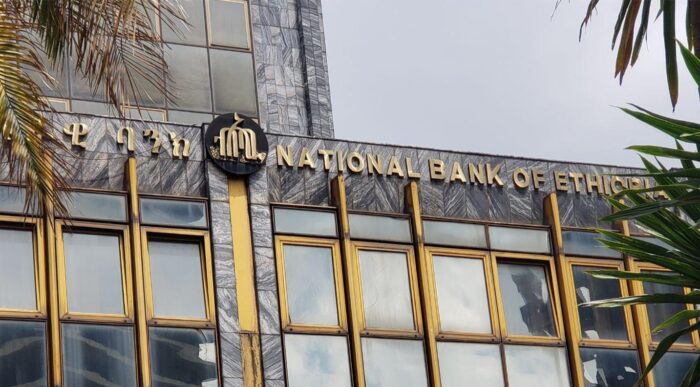
Ethiopia Removes Credit Cap, Raises Policy Rate to Reinforce Tight Monetary Policy
The National Bank of Ethiopia (NBE) has announced a series of monetary policy measures, including the removal of the country’s credit cap and a one-percentage-point increase in its policy interest rate, as it seeks to maintain a tight monetary policy stance and curb inflationary pressures.
The decisions were approved during the Monetary Policy Committee’s (MPC) seventh regular meeting held on July 13, following a review of inflation trends, economic growth, financial sector performance, and global developments affecting the Ethiopian economy.
The central bank said the temporary credit cap, introduced as part of the country’s transition to a new monetary policy framework, has achieved its objective and will be fully removed.
According to the MPC, the move reflects Ethiopia’s successful transition toward an interest rate-based monetary policy framework using indirect policy instruments rather than a relaxation of monetary policy.
To offset the potential inflationary impact of lifting the credit cap, the NBE Board approved an increase in the policy rate by one percentage point while maintaining the existing ±3 percentage-point interest rate corridor.
The committee also approved the introduction of targeted reserve requirements for individual banks based on regular assessments of their loan-to-deposit ratios if credit growth begins to pose inflationary risks.
In addition, the central bank reduced the foreign exchange commission rate from 2.5 percent to 1.5 percent to lower import-related costs, contain inflationary pass-through, and improve the efficiency of the foreign exchange market.
The NBE also lowered the foreign exchange surrender requirement on goods exports from 50 percent to 30 percent, saying the measure is intended to strengthen export competitiveness, deepen the foreign exchange market, and improve price discovery.
Inflation remains elevated
The MPC noted that inflation had fallen significantly following the July 2024 macroeconomic reforms, reaching single-digit levels by December 2025.
However, inflation accelerated again from April 2026 following fuel supply disruptions linked to the Middle East conflict.
Headline inflation rose to 13.4 percent in May 2026 from 11.7 percent in April, driven by increases in both food and non-food prices. While inflation is expected to moderate by the end of 2026, the committee said it is likely to remain in double digits over the next six months.
The committee said Ethiopia’s economy has maintained strong growth momentum, with real GDP expanding by 9.2 percent in the 2024/25 fiscal year. Growth was supported by industry, services, and agriculture, while the economy is projected to grow by 10.2 percent in the current fiscal year.
Industrial output, including cement, electricity generation, and iron and steel production, remained robust, while the services sector benefited from increased tourist arrivals and growth in passenger and freight air transport.
According to the MPC, Ethiopia’s external sector recorded significant improvement following the July 2024 reforms.
Export earnings nearly tripled during the 2025/26 fiscal year, while stronger private and official transfers helped narrow the current account deficit to USD 1.8 billion from USD 6.2 billion before the reforms.
The central bank said foreign exchange reserves increased to nearly 20 times their pre-reform level, reflecting stronger external competitiveness and improved foreign exchange earnings.
The committee reported that Ethiopia’s banking sector remained stable, with improving deposit mobilization, loan recovery, and asset quality.
The loan-to-deposit ratio of private banks declined to 72.7 percent from 90.3 percent in 2022/23, indicating stronger liquidity management.
Fiscal policy also remained disciplined, with the government continuing to avoid direct central bank financing. The budget deficit declined to 0.9 percent of GDP during the first ten months of the 2025/26 fiscal year, compared with 2.1 percent before the reforms.
The Monetary Policy Committee said its next meeting is scheduled for the end of September 2026, or earlier if necessary.
