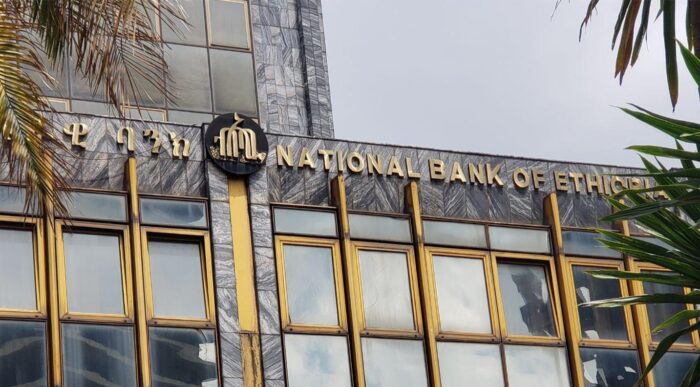
NBE

Ethiopia Maintains 16% Policy Rate as Inflation Remains at 14.9%

Ethiopia Maintains 16% Policy Rate as Inflation Remains at 14.9%

The National Bank of Ethiopia (NBE) has maintained its benchmark policy interest rate at 16% as inflation remains elevated, despite signs of easing price pressures. The decision was announced following the eighth regular meeting of the NBE’s Monetary Policy Committee (MPC), held on November 3, 2026, in Addis Ababa. The committee also decided to keep the existing interest rate corridor of plus or minus 300 basis points unchanged, maintaining a tight monetary policy stance to contain inflation and support price stability. According to the central bank, Ethiopia’s annual headline inflation stood at 14.9% in September 2026. Although inflation has started…

Read More
Ethiopia Reiterates Ban on Unauthorized Virtual Asset Activities

Ethiopia Reiterates Ban on Unauthorized Virtual Asset Activities

The National Bank of Ethiopia (NBE) has reiterated that the use, purchase, sale, exchange, transfer, trading, settlement and facilitation of transactions involving virtual assets are prohibited unless expressly authorized under the country’s existing legal framework. In a public notice issued on Wednesday, the central bank said the prohibition extends beyond cryptocurrencies to include digital representations of value that can be electronically traded, transferred, exchanged or used for payments, investment and similar purposes. The NBE said the restriction covers activities including the exchange of virtual assets for fiat currencies, exchanges between different forms of virtual assets, the transfer of virtual assets,…
Read More
IMF Expects Ethiopia’s Foreign Exchange Reserves to Reach $6 Billion

IMF Expects Ethiopia’s Foreign Exchange Reserves to Reach $6 Billion

IMF Expects Ethiopia's Foreign Exchange Reserves to Reach $6 Billion, Warns of External Risks The International Monetary Fund (IMF) expects Ethiopia's foreign exchange reserves to rise to nearly $6 billion in the coming months, enough to cover more than two months of the country's imports, according to its latest assessment of Ethiopia's economic reform program. The projection is contained in the IMF's fifth review of Ethiopia's economic reform program under the Extended Credit Facility (ECF), a 132-page report that evaluates the country's macroeconomic performance, policy reforms, and remaining challenges. The IMF projects that Ethiopia's gross international reserves will reach $5.9…
Read More
NBE Removes Credit Cap, Raises Policy Rate

NBE Removes Credit Cap, Raises Policy Rate

Ethiopia Removes Credit Cap, Raises Policy Rate to Reinforce Tight Monetary Policy The National Bank of Ethiopia (NBE) has announced a series of monetary policy measures, including the removal of the country's credit cap and a one-percentage-point increase in its policy interest rate, as it seeks to maintain a tight monetary policy stance and curb inflationary pressures. The decisions were approved during the Monetary Policy Committee's (MPC) seventh regular meeting held on July 13, following a review of inflation trends, economic growth, financial sector performance, and global developments affecting the Ethiopian economy. The central bank said the temporary credit cap,…
Read More
Ethiopia Issues New Franco Valuta Import Rules

Ethiopia Issues New Franco Valuta Import Rules

The National Bank of Ethiopia (NBE) has introduced a new directive governing imports under the Franco Valuta scheme, aiming to strengthen oversight, improve transparency, and facilitate investment without increasing pressure on the country's foreign exchange reserves. The new Import on Franco Valuta Directive No. FVD/01/2026, which took effect on May 29, 2026, establishes a comprehensive legal framework for imports financed through foreign currency sources outside Ethiopia’s domestic banking system. According to the NBE, the directive was introduced to address longstanding concerns over misuse of the Franco Valuta system, including misreporting, illicit financial flows, circumvention of foreign exchange regulations, and weak…
Read More
Ethiopia Authorizes All Commercial Banks to Handle China Export Permits

Ethiopia Authorizes All Commercial Banks to Handle China Export Permits

Ethiopia Expands Forex Reforms, Authorizes All Banks to Handle China Export Permits The National Bank of Ethiopia (NBE) has introduced a new round of foreign exchange reforms, easing banking procedures for traders and authorizing all commercial banks to process export permits and related transactions for goods destined for China. In separate public notices issued on May 25 and May 26, 2026, the central bank announced amendments to its foreign exchange directive and lifted a long-standing restriction that had limited China-bound export permit services exclusively to the Commercial Bank of Ethiopia (CBE). Under the latest decision, all licensed commercial banks in…
Read More
Ethiopia Eases Foreign Exchange Rules

Ethiopia Eases Foreign Exchange Rules

Ethiopia Eases Foreign Exchange Rules, Revises Letter of Credit Charges The National Bank of Ethiopia (NBE) has announced new amendments to the country’s foreign exchange directive, easing approval requirements for foreign currency transactions and introducing reforms to standardize fees charged on Letters of Credit (LCs). In a public notice issued on May 25, the central bank said the measures are part of ongoing reforms aimed at strengthening Ethiopia’s transition toward a market-based foreign exchange system and improving the efficiency and competitiveness of the forex market. Under the revised directive, banks are now authorized to approve Letters of Credit and Cash…
Read More
Liquidity Surges in Ethiopia’s Banking Sector Amid Monetary Policy Shift

Liquidity Surges in Ethiopia’s Banking Sector Amid Monetary Policy Shift

A new report by the Ethiopian Economics Association has revealed a significant buildup of liquidity in Ethiopia’s banking system, driven by strong deposit growth, foreign exchange inflows, and ongoing monetary policy reforms. The Quarterly Macroeconomic Update (March 2026) shows that liquidity conditions in Ethiopia have shifted markedly, with the National Bank of Ethiopia (NBE) increasingly acting as a liquidity absorber rather than a provider. According to the report, total deposit liabilities at the central bank surged to 1.66 trillion birr, rising by 39.4 percent year-on-year. This sharp increase was largely driven by commercial bank reserves, which more than doubled over…
Read More
Ethiopia Warns Against Illegal Money Transfer Networks

Ethiopia Warns Against Illegal Money Transfer Networks

The National Bank of Ethiopia (NBE) has issued a public warning against the use of unauthorized money transfer agents and illegal Hawala networks, stating that several operators have been found engaging in activities outside the scope of their legal authorization. In a public notice released on April 2, 2026, the central bank said a recent review of licensed Money Transfer Agents (MTAs) operating in Ethiopia revealed that some operators were conducting illegal transactions and violating the terms of their licenses. According to the NBE, the use of unauthorized money transfer agents and informal Hawala networks is prohibited under Ethiopian law…
Read More
Ethiopia Maintains Tight Policy, Warns of Middle East Risks

Ethiopia Maintains Tight Policy, Warns of Middle East Risks

Ethiopia Keeps Tight Monetary Policy Amid Falling Inflation, Warns of Middle East Risks National Bank of Ethiopia has maintained a tight monetary policy stance as inflation declines to single digits, while warning that escalating tensions in the Middle East could pose fresh risks to price stability and the broader economy. In a statement following its sixth Monetary Policy Committee (MPC) meeting, the central bank said inflation fell to 9.7 percent in February 2026, continuing a steady downward trend and meeting its single-digit target since late 2025. The decline was driven by sustained tight monetary policy, improved fiscal discipline, and supply-side…
Read More