IMF

IMF Expects Ethiopia’s Foreign Exchange Reserves to Reach $6 Billion

IMF Expects Ethiopia’s Foreign Exchange Reserves to Reach $6 Billion

IMF Expects Ethiopia's Foreign Exchange Reserves to Reach $6 Billion, Warns of External Risks The International Monetary Fund (IMF) expects Ethiopia's foreign exchange reserves to rise to nearly $6 billion in the coming months, enough to cover more than two months of the country's imports, according to its latest assessment of Ethiopia's economic reform program. The projection is contained in the IMF's fifth review of Ethiopia's economic reform program under the Extended Credit Facility (ECF), a 132-page report that evaluates the country's macroeconomic performance, policy reforms, and remaining challenges. The IMF projects that Ethiopia's gross international reserves will reach $5.9…
Read More
IMF Approves $464 Million for Ethiopia

IMF Approves $464 Million for Ethiopia

IMF Urges Ethiopia to Exercise Caution on New Borrowing The International Monetary Fund (IMF) has approved an additional $464 million in financing for Ethiopia while urging the country to remain cautious about taking on new debt obligations. The funding was announced following the completion of the fifth review of Ethiopia’s macroeconomic reform program. It forms part of a $3.4 billion loan package approved by the IMF two years ago and scheduled for disbursement over four years. According to the IMF, the latest tranche is the largest released so far under the program and includes an additional $200 million in financing…
Read More
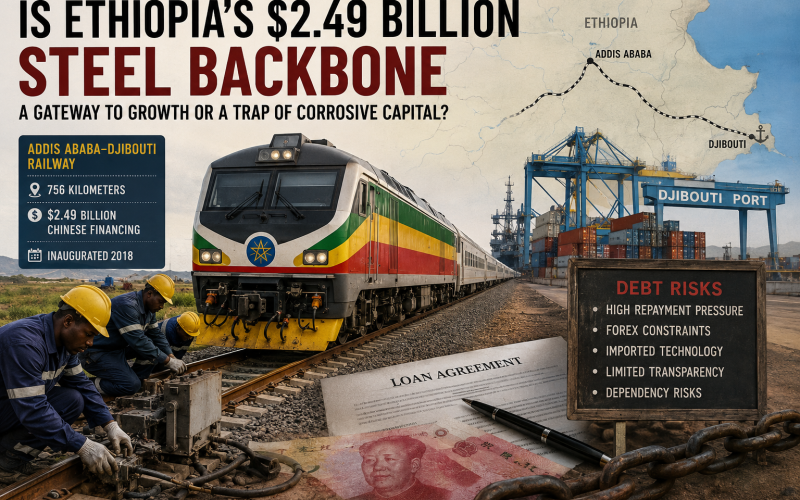
Is Ethiopia’s $2.49 Billion Steel Backbone a Gateway to Growth or a Trap of Corrosive Capital?

Is Ethiopia’s $2.49 Billion Steel Backbone a Gateway to Growth or a Trap of Corrosive Capital?

 By Ayele Addis & Team The Grand Ambition: A Steel Corridor to the Sea At dawn on the outskirts of Addis Ababa, inside a maintenance compound lined with imported Chinese electrical panels, Ethiopian technicians begin the grueling work of keeping one of Africa’s most ambitious transport systems alive. These engineers inspect the braking and signaling systems of the 756-kilometer Addis Ababa–Djibouti Railway, a project once celebrated as the backbone of Ethiopia’s modernization. For many, the railway is a powerful symbol of national ambition, a steel corridor connecting a landlocked economy to global trade routes. However, years after its inauguration, it…
Read More
IMF Flags Ongoing Economic Risks in Ethiopia

IMF Flags Ongoing Economic Risks in Ethiopia

IMF Highlights Reform Progress, Warns of Persistent Risks in Ethiopia’s Economy The International Monetary Fund (IMF) has acknowledged Ethiopia’s recent economic reform efforts while warning that deep-seated structural challenges, inflationary pressures, and external vulnerabilities continue to pose significant risks to the country’s economic recovery. In its latest comprehensive country report, the IMF notes that Ethiopia has made measurable progress in stabilizing key macroeconomic indicators following years of conflict, global economic shocks, and domestic imbalances. However, the Fund stresses that sustained reform implementation will be critical to achieving long-term economic stability and inclusive growth. According to the report, Ethiopia’s economy has…
Read More
IMF Approves a $261 million Disbursement for Ethiopia

IMF Approves a $261 million Disbursement for Ethiopia

IMF Approves New Disbursement for Ethiopia Under Extended Credit Facility The Executive Board of the International Monetary Fund has approved the fourth review of Ethiopia’s program under the Extended Credit Facility (ECF), clearing the way for the immediate disbursement of about US$261 million to support the country’s balance of payments and fiscal needs. The latest approval brings total disbursements under the 48-month arrangement to approximately US$2.18 billion, out of a total program size of about US$3.4 billion, which was approved in July 2024 to support Ethiopia’s Homegrown Economic Reform Agenda. According to the IMF, Ethiopia has continued to make progress…
Read More
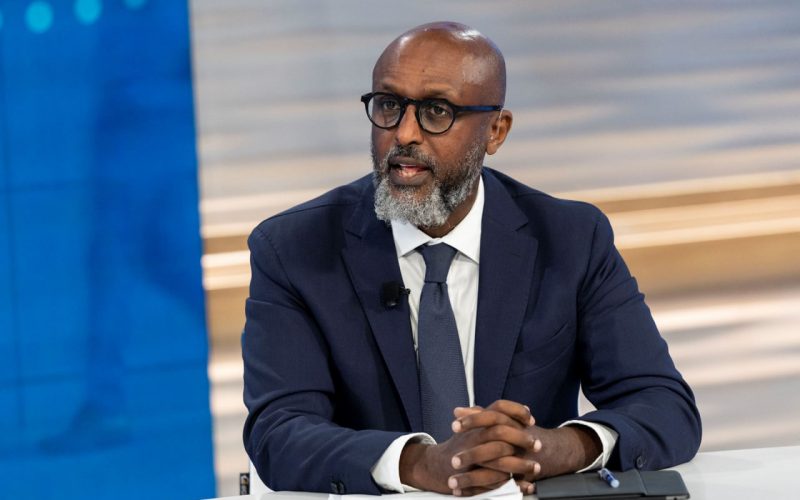
IMF Africa Chief Abebe Aemro Selassie to Retire in 2026

IMF Africa Chief Abebe Aemro Selassie to Retire in 2026

IMF Africa Director Abebe Selassie to Step Down in 2026 After Three Decades of Service The International Monetary Fund (IMF) has announced that Abebe Aemro Selassie, Director of its African Department, will retire on May 1, 2026, ending a 32-year career at the global financial institution marked by deep engagement with sub-Saharan Africa during some of its most challenging economic periods. IMF Managing Director Kristalina Georgieva praised Selassie’s leadership, noting that since assuming the role in 2016 he has guided the Fund’s work across 45 sub-Saharan African countries amid unprecedented global and regional shocks. These included the COVID-19 pandemic, surging…
Read More
Ethiopia Secures Major IMF Support Amid Debt Burden

Ethiopia Secures Major IMF Support Amid Debt Burden

Ethiopia Secures Major IMF Support Amid Debt and Growth Challenges Ethiopia has received one of the largest International Monetary Fund (IMF) financing packages in Sub-Saharan Africa this year, according to the IMF’s 2025 Annual Report. The Fund approved SDR 2.56 billion (about USD 3.47 billion) under its Extended Credit Facility (ECF) to support Ethiopia’s economic reforms and stabilize its fragile financial situation. The IMF noted that low-income countries like Ethiopia continue to face mounting debt distress, rising inflation, and external shocks from global conflicts and trade disruptions. More than half of low-income countries are now at high risk of debt…
Read More
Ethiopia Faces $10.8B Debt Gap

Ethiopia Faces $10.8B Debt Gap

IMF and World Bank Warn Ethiopia’s Debt Remains Unsustainable, Outline $10.8 Billion Financing Gap Ethiopia remains in debt distress despite recent reforms and creditor negotiations, according to a new joint debt sustainability analysis released by the International Monetary Fund (IMF) and the World Bank. The report highlights that the country’s external debt is unsustainable, driven by repeated breaches of export-related debt thresholds, missed Eurobond payments, and liquidity pressures exacerbated by global shocks. The analysis notes that Ethiopia defaulted on its Eurobond in December 2023 after missing coupon payments and a $1.1 billion principal repayment in December 2024. Although an agreement…
Read More
IMF Warns of Lasting Parallel Market in Ethiopia

IMF Warns of Lasting Parallel Market in Ethiopia

IMF Warns Structural Challenges Could Sustain Parallel Currency Market in Ethiopia Despite Reforms The International Monetary Fund (IMF) has warned that despite Ethiopia’s recent reforms to unify its foreign exchange system, structural challenges in the country may continue to sustain the parallel currency market. According to the IMF’s latest country report released in July 2025, Ethiopia’s decision to adopt a market-determined exchange rate in July 2024 initially narrowed the gap between official and parallel market rates, bringing the premium close to zero by September 2024. However, this spread has since widened again to around 17 percent by May 2025. The…
Read More
IMF Approves $262 Million Disbursement for Ethiopia

IMF Approves $262 Million Disbursement for Ethiopia

The International Monetary Fund (IMF) has approved the third review of Ethiopia’s economic reform program under the Extended Credit Facility (ECF), unlocking a fresh disbursement of approximately $262.3 million to support the country’s balance of payments and fiscal needs. The approval brings total disbursements under the four-year arrangement to about $1.87 billion. The review, coupled with the IMF’s 2025 Article IV consultation, underscores Ethiopia’s solid progress in implementing its Homegrown Economic Reform Agenda (HGER), particularly in stabilizing inflation, boosting exports, and accumulating international reserves. The ECF arrangement—originally approved in July 2024 for a total of $3.4 billion—aims to address macroeconomic…
Read More