
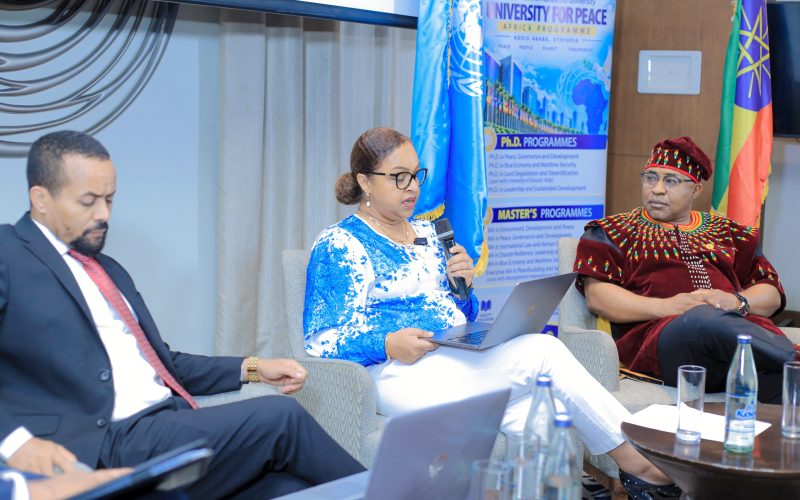
ADDIS ABABA — As global powers court the continent diplomatically and in security settings, the University for Peace (UPEACE) Africa Programme held a high-level policy dialogue in Addis Ababa that shone a spotlight on the human and strategic costs of major power rivalry in Africa.
While the forum was about Africa’s strategic agency in an increasingly fractured multipolar order, controversy over recruiting Africans into external military conflicts (most famously on the front lines of the war in Ukraine) also came up as questions were asked about what is at stake for Africa’s youth.
Across the continent and especially in Kenya, Ghana and South Africa, allegations of job seekers and students being drawn into Russian military operations by misleading labour contracts were aired.
Questions about the legal and physical protection of African nationals have cropped up across the spectrum of conflict since 2022, when Ukraine’s early calls for foreign volunteers led to diplomatic clashes with countries like Senegal and Nigeria over unauthorized recruitment on sovereign African soil.
The debate is particularly strong in Addis Ababa — the diplomatic capital of the African Union. In Ethiopia (which has long friendly relations with Moscow but complicated relationships with Western donors and Beijing too) it hits a nerve: crowds of young men gathered outside the Russian Embassy in Addis Ababa in 2022 after unsubstantiated rumours of military compensation; acute youth unemployment and economic stagnation leave citizens open to dangerous foreign opportunities.
The discussion comes as Russia prepares to host the third Russia–Africa Summit on October 28–29 — expanding its political, trade and defence footprint across Africa — but panelists warned that Moscow is not alone in an overcrowded field.
From the Red Sea to the Sahel’s rich natural resources, the US-China-Europe tug of war is changing African geopolitics. Several participants said that major external powers treat Africa in transactional terms (votes in multilateral bodies, minerals needed for security and outsourcing of security burdens) but little structural industrialisation in return.
When external competition isn’t regulated, human cost falls on Africans themselves (whether covert mercenary recruitment abroad or proxy-financed instability closer to home). The panel rejected the idea that Africa is simply a passive victim of global geopolitics: speakers said often the problem is not so much national governance failure as consular protection failure and collective leverage lessness — individual states try to play rival powers off each other for short-term financial bailouts/ regime security, but there is no strategy through the AU to set binding ground rules for foreign engagement. To address this core institutional problem, Professor Samuel Kale Ewusi, Regional Director of the UPEACE Africa Programme, said, “We need a continental response”: “Africa can’t be a passive recipient of geopolitical agendas from the outside world. Multipolarity only works for Africa if our leaders set clear united ground rules through collective institutions like the African Union — partnerships must be linked to structural development and above all uncompromising protection of African lives”.
The discussion ended with a policy imperative for Ethiopia and the rest of Africa: if African governments cannot use global multipolarity to generate domestic economic opportunities (and enforce legal guardrails on labour migration), then external powers of all ideological stripes will continue to treat the continent’s demographic dividend as expendable capital.
