
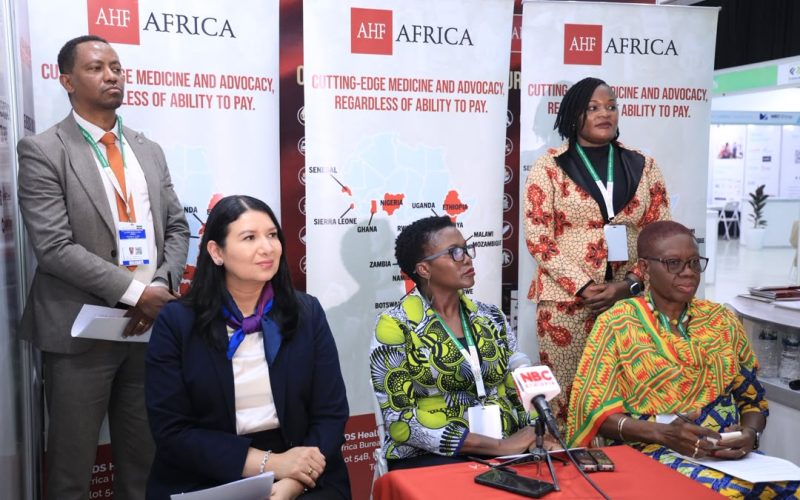
Africa’s mounting sovereign debt is undermining its ability to finance healthcare and prepare for future health emergencies, the AIDS Healthcare Foundation (AHF) has warned, calling for debt relief and stronger African influence in global health decision-making.
Dr. Penninah Iutung, Executive Vice President for Global Affairs at AHF, said Africa could not achieve health security without greater control over decisions affecting its health systems and sufficient financial resources to implement them.
Speaking in a press statement issued during the International Conference on Public Health in Africa (CPHIA), underway in Addis Ababa, Iutung said growing debt burdens were diverting scarce government resources away from healthcare, pandemic preparedness and response, and other essential public services.
She argued that African countries should not be forced to choose between repaying creditors and protecting the health of their populations.
Iutung called for meaningful debt relief and restructuring, stronger domestic resource mobilization, and reforms to the global financial architecture to enable African countries to invest sustainably in their development priorities.
She also urged governments to build on African-led initiatives, including the Common African Position on Debt, to ensure that public health financing remains central to discussions on economic reforms.
Beyond financing, AHF stressed the need for African countries to strengthen their collective influence in shaping global health policies and negotiations.
Iutung said discussions surrounding the World Health Organization’s Pandemic Agreement and negotiations on pathogen access and benefit-sharing presented an opportunity to address longstanding inequalities in global health governance.
She emphasized that African countries must be able to participate in responding to health threats while securing fair and binding commitments to share vaccines, diagnostics, treatments and other benefits arising from health research and development.
However, she said meaningful participation requires more than representation at international negotiating tables, calling for stronger coordination among African governments and regional institutions, sustained technical support for health diplomacy, and common negotiating positions.
She identified the African Union, Africa Centres for Disease Control and Prevention (Africa CDC), and the African Medicines Agency as important institutions in translating the continent’s priorities into greater influence over global health decisions.
Iutung further warned that international health agreements would have limited impact unless African countries had sufficient financial resources to implement their commitments.
She called for CPHIA discussions to go beyond declarations and produce practical recommendations, clearly defined responsibilities and concrete follow-up actions.
Meanwhile, Africa CDC Director-General Dr. Jean Kaseya said the continent was entering a new era of self-reliance in the health sector, citing improvements in the institution’s performance and its growing capacity to respond to disease outbreaks.
Kaseya highlighted Africa CDC’s role in supporting responses to Ebola outbreaks in Uganda and Tanzania, describing the efforts as evidence of the continent’s increasing ability to manage public health emergencies.
He said Africa should move beyond its historical association with disease outbreaks and gain recognition for its capacity to develop solutions and contribute to global health advancement.
Kaseya urged African governments to strengthen their public health institutions and ensure the continent receives fair treatment in international trade and health partnerships.
His remarks underscored the need for African countries to build stronger health systems and institutions capable of responding to emergencies while reducing dependence on external support.
The conference, held under the theme “Africa’s Health Security and Sovereignty,” is taking place from November 23 to 27, 2026, in Addis Ababa, bringing together thousands of participants both in person and virtually.
The gathering is providing a platform for African governments, health institutions and development partners to discuss strategies for strengthening health systems, improving domestic health financing, expanding local production of medical products and enhancing preparedness for future public health emergencies.
