
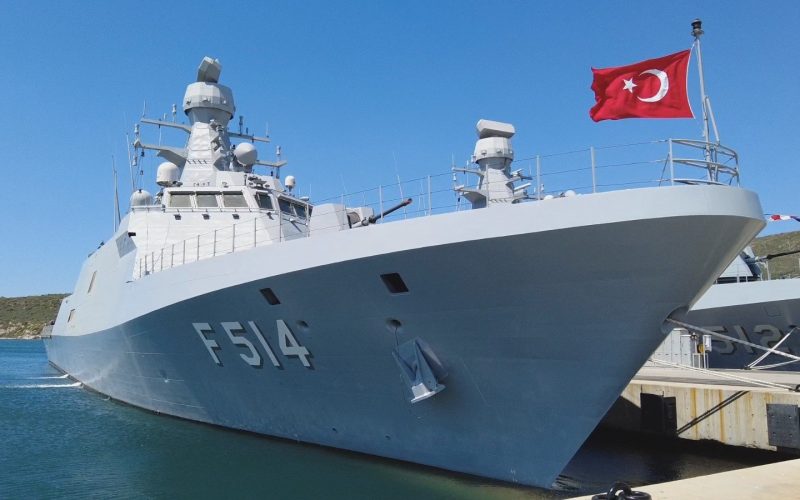
A Turkish Navy warship has recently arrived in Somalia, marking a significant development in the military cooperation between the two nations.
This move follows a bilateral agreement signed between Somalia and Turkey just two months ago, spanning a comprehensive 10-year military partnership.
The bilateral agreement grants Turkey strategic control over certain segments of Somalia’s coastline, while also facilitating the provision of training and support to the Somali Navy by its Turkish counterpart.
Under the terms of this accord, the Turkish Navy dispatched the warship F514 to the waters off Mogadishu.
Beyond military collaboration, Somalia and Turkey have also inked a deal aimed at harnessing the potential of gas and oil resources in the region’s waters.
Somalia’s Prime Minister’s office elucidated that this agreement encompasses exploration and production activities within Somalia’s territorial waters and on its land.
Turkey Minister of Energy and Natural Resources Alparslan Bayraktar emphasized that the agreement seeks to leverage Somalia’s natural resources for the benefit of its people, while simultaneously bolstering Turkey’s influence in the Horn of Africa.
However, reports from Somalia indicate a groundswell of discontent among some segments of the population regarding the perceived extent of territorial concessions made to Turkey.
Protest rallies have erupted in Mogadishu, with demonstrators expressing their grievances over what they perceive as a loss of sovereignty.
Meanwhile, tensions have flared in the region following a port services agreement concluded between Ethiopia and Somaliland four months ago.
This pact grants Ethiopia access to a sea gateway in Somaliland’s territory, contingent upon Ethiopia’s recognition of Somaliland’s statehood.
Somalia has vehemently opposed this agreement, denouncing it as a violation of its territorial integrity.
In response, Somalia has petitioned international bodies such as the United Nations, the African Union, and the Inter-Governmental Authority on Development (IGAD), urging them to intervene and nullify the Ethiopia-Somaliland agreement.
However, Ethiopia contends that its memorandum of understanding with Somaliland aligns with international norms and does not impinge on the sovereignty of any nation.
In the midst of these diplomatic maneuvers, Somalia has forged ahead with its military collaboration with Turkey, aiming to fortify its maritime security.
Turkey’s commitment involves safeguarding Somalia’s sea gates, reinforcing its position as a key ally in the region.
Addressing concerns over potential friction between Ethiopia and Somalia-Turkey cooperation, Ethiopian officials have reiterated their stance of non-interference.
Ethiopia maintains that its relations with Turkey remain cordial, emphasizing the sovereign prerogative of nations to engage in bilateral agreements.
The complex geopolitical landscape has seen recent diplomatic tit-for-tat actions, including Somalia’s expulsion of the Ethiopian ambassador and the closure of two consulate offices in Garowe and Hargeisa, underscoring the fluidity and sensitivity of regional dynamics.
