
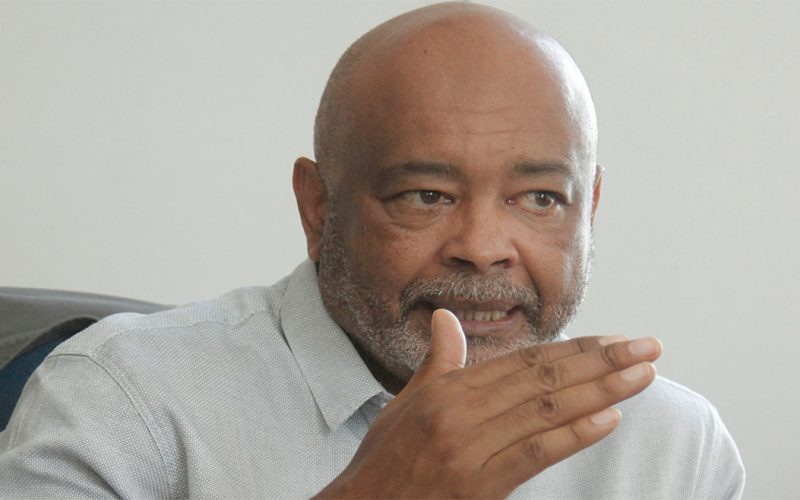
By Kebour Ghenna
Ethiopian renowned economist Kebour Gena critiques the International Monetary Fund’s (IMF) recent assessment of Ethiopia’s economic reforms and monetary policies.
While the IMF has publicly praised Ethiopia for narrowing the exchange rate gap and implementing tighter monetary controls, Ghenna argues that these successes are overstated and fail to address deeper, more fundamental issues that are impeding Ethiopia’s true economic recovery. Here’s a breakdown of the key points he makes:
- The Exchange Rate Gap
Ghenna acknowledges that the IMF has lauded Ethiopia for closing the gap between the official exchange rate and the black-market rate. However, he argues that the IMF’s praise is premature and superficial. While the official rate has moved closer to the black-market rate, there remains a 12-15% gap.
He likens this situation to patching a leaky boat with duct tape—though some progress has been made, the underlying issue is far from resolved. For businesses that still struggle to access foreign currency, this gap remains a significant problem, and Ghenna questions whether this can truly be considered a successful economic fix.
- Business Environment and Inflation
The IMF also highlights the “better management of the economy” and the improved “business environment” in Ethiopia. Ghenna, however, is critical of this view, pointing out that many entrepreneurs continue to face significant challenges, including high inflation, eroded purchasing power, and an excessively bureaucratic regulatory environment.
For ordinary citizens and businesses, these issues are much more pressing than the technical economic indicators celebrated by the IMF. Ghenna suggests that while the IMF’s assessment may be accurate in some respects, it overlooks the day-to-day realities faced by the Ethiopian people, particularly the strain on local businesses.
- Tight Monetary Policies and Austerity
A significant portion of the IMF’s praise is directed at Ethiopia’s tight monetary policies, which include controlling inflation and reducing borrowing from the central bank.
While these policies may sound effective on paper, Ghenna argues that they could have adverse consequences. In his view, these measures risk pushing Ethiopia into austerity—a period of economic contraction—at a time when the country needs robust investment in sectors like infrastructure and agriculture to drive growth and job creation.
Tight monetary policies, while necessary to control inflation, may hinder the very growth that Ethiopia needs to lift its population out of poverty.
- Ignoring Security and Political Instability
One of Ghenna’s most critical points is the IMF’s failure to address the ongoing security crises in Ethiopia, particularly in the Amhara and Oromia regions.
These areas are vital to the country’s agricultural output, yet they are also the epicenter of significant violence and instability. Ghenna argues that the IMF’s economic analysis fails to account for the profound impact that these security challenges have on Ethiopia’s economy. Armed conflicts and displacement disrupt agricultural production, erode livelihoods, and exacerbate poverty.
Ignoring these factors, according to Ghenna, is a glaring oversight that undermines the IMF’s ability to offer meaningful and effective solutions.
- A Narrow Economic Focus
Ghenna concludes by criticizing the IMF’s approach as overly focused on technical economic indicators, without sufficient regard for the broader socio-political context.
While metrics like inflation rates, exchange rate stability, and fiscal discipline are important, they only capture part of the story.
For Ethiopia to recover and grow sustainably, Ghenna argues, the IMF must take a more nuanced, holistic approach that incorporates the realities of security, governance, and the lived experiences of ordinary Ethiopians.
Without considering the political and social challenges that shape the economy, the IMF risks pushing policies that are disconnected from the country’s actual needs.
Conclusion
In summary, Ghenna’s critique is that the IMF’s assessment of Ethiopia’s economic progress is overly optimistic and fails to account for the deeper challenges facing the country.
While the IMF’s technical successes are acknowledged, the article stresses that Ethiopia’s economic recovery cannot be achieved through narrow monetary measures alone.
The IMF’s oversight of critical issues like security instability, inflationary pressures on local businesses, and the need for infrastructure investment means that its recommendations may ultimately fall short of what is required to foster meaningful growth and development in Ethiopia.
Ghenna calls for a more integrated and context-sensitive approach to Ethiopia’s economic challenges—one that recognizes both the technical and socio-political realities at play.
