
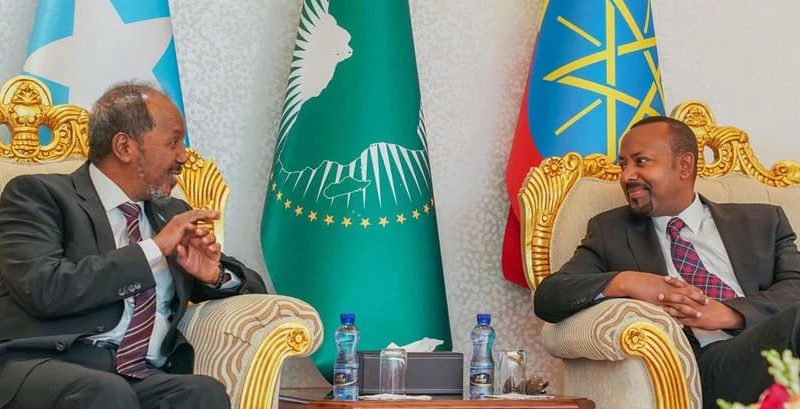
Ethiopia and Somalia Commit to Upholding the Ankara Agreement
Over a year ago, Ethiopia signed a port agreement with Somaliland, a self-declared independent region of Somalia.
This agreement sparked diplomatic tensions, leading Somalia to sever ties with Ethiopia, citing a violation of its sovereignty.
In an effort to mediate and restore relations, Turkey, a close ally to both nations, facilitated a dialogue forum in Ankara.
Two weeks ago, Ethiopian Prime Minister Abiy Ahmed and Somali President Hassan Sheikh Mohamud announced a renewed agreement brokered by Turkish President Recep Tayyip Erdoğan.
The Ankara agreement underscores mutual respect for sovereignty while enabling Ethiopia to access port services through Somalia.
This arrangement aims to foster economic cooperation while addressing the diplomatic rift caused by Ethiopia’s prior agreement with Somaliland.
As part of the agreement’s implementation, Somalia’s State Minister for Foreign Affairs and security officials visited Addis Ababa for bilateral talks.
Redwan Hussein, the Director-General of Ethiopia’s Intelligence and Security Service, confirmed discussions with Abdullahi Mohamed Ali, the Director of Somalia’s National Intelligence and Security Agency.
In a statement, Redwan emphasized the shared commitment to implementing the Ankara agreement, highlighting both nations’ resolve to resist interference by third parties aiming to disrupt peace in the Horn of Africa.
Despite progress, tensions remain. Somalia’s Foreign Ministry accused Ethiopian forces of attacking the Doolow area in the Gedo region, claiming the incident targeted Somali security forces and civilians. Ethiopia swiftly denied the allegations in a formal statement.
“The Ethiopian Government is dismayed by the statement issued by the Somali Ministry of Foreign Affairs on December 23, 2024, which falsely accuses Ethiopian forces of involvement in the Doolow incident,” the Ethiopian statement read.
Ethiopia attributed the allegations to “elements intent on derailing the normalization of relations” between the two countries.
It called on both nations to reject the actions of “perennial spoilers” working against stability in the Horn of Africa.
The Ethiopian government reaffirmed its commitment to strengthening ties with Somalia under the Ankara Declaration and pledged to work closely with Somali authorities to prevent similar incidents.
Meanwhile, Somalia’s Foreign Minister traveled to Cairo for discussions with his Egyptian counterpart. In a joint statement, the two ministers announced Egypt’s intent to deploy peacekeeping forces to Mogadishu.
They also declared that countries without Red Sea borders should not involve themselves in the region’s affairs, an apparent reference to Ethiopia.
The Ankara agreement represents a pivotal opportunity for Ethiopia and Somalia to mend relations and advance regional stability.
However, the situation remains fragile as external and internal pressures threaten progress. Both nations must demonstrate resolve to uphold their commitments and foster lasting peace.
Ethiopia has reiterated its dedication to revitalizing and deepening its fraternal ties with Somalia, expressing optimism for a future rooted in mutual respect and cooperation.
