
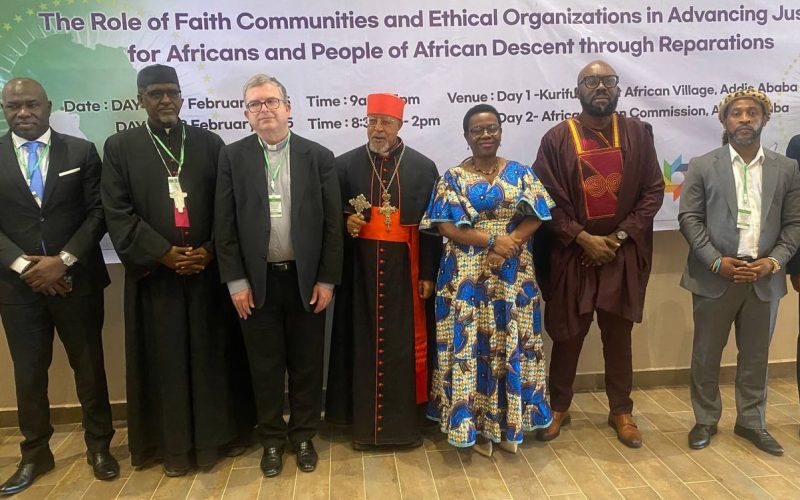
Faith Communities Collaborate to Advance Justice for Africans and People of African Descent
A significant workshop, organized by Heavenly Culture, World Peace, Restoration of Light (HWPL) in partnership with the African Union (AU), is taking place in Addis Ababa, Ethiopia.

The event, which revolves around the theme “The Role of Faith Communities and Ethical Organizations in Advancing Justice for Africans and People of African Descent Through Reparations,” aims to engage spiritual and ethical leaders in a crucial conversation about reparations and justice for those affected by the historical and ongoing impacts of colonialism, slavery, and systemic discrimination.
The African Union’s theme for 2025 is “Reparations for Africans and People of African Descent as a Means to Achieve Justice,” a vital initiative focused on addressing the enduring legacies of colonialism and the transatlantic slave trade.
The theme calls for a collective effort to right historical wrongs by uniting Africans on the continent with those in the diaspora, striving for justice, equity, and healing.
The workshop’s core objective is to delve into spiritual and ethical perspectives on reparations, examining the moral, theological, and philosophical foundations that support reparative justice.
It draws insights from a broad spectrum of faith traditions, both within Africa and the African diaspora. By doing so, the event seeks to foster an inclusive dialogue that can influence actions for reparation at various levels—community, national, regional, and continental.
Opening the workshop, Monique Nsanzabaganwa, Deputy Chairperson of the African Union Commission (AUC), stressed the importance of the 2025 AU theme as a call to action.
She highlighted that faith has always been a powerful force for social change and urged faith leaders to channel this energy into the reparations movement.
Nsanzabaganwa emphasized that it is time for tangible actions to address the injustices that have historically oppressed African people and their descendants.
The workshop aims to mobilize faith-based and ethical organizations, seeking ways in which these institutions can play a pivotal role in advancing reparations.
Key goals include raising awareness, gathering resources, and contributing to the broader reparations agenda.
Faith communities are seen as essential in this effort due to their widespread influence and capacity to unite people toward common causes.
The historical trauma caused by the Trans-Atlantic Slave Trade, colonialism, and slavery remains deeply entrenched in the lives of African people and their descendants. The impacts of these injustices are still felt in various ways today.
Socially and culturally, the forced removal of millions of Africans through the transatlantic slave trade disrupted families and communities.
The disintegration of social structures, suppression of languages, and erasure of cultural identities left deep scars. These harms impeded the transmission of heritage to future generations, a loss that still reverberates in the present.
Economically, slavery and colonization drained Africa’s resources and labor. The forced labor of enslaved Africans underpinned the wealth of colonial powers, yet these individuals were denied compensation, rights, and dignity. Colonial policies systematically exploited Africa’s natural wealth for European gain, leaving African economies impoverished and reliant on foreign powers.
Politically, colonization stripped African nations of sovereignty. European-imposed governance systems dismantled traditional political structures, leading to long-lasting divisions. The borders created during colonial rule continue to fuel conflict and instability across the continent, exacerbating political challenges.
The workshop is part of a broader movement to catalyze meaningful change and elevate the AU’s efforts in achieving reparations.
It is an essential platform for fostering international recognition of the need for reparations and the collective responsibility to address these historic injustices.
By creating partnerships across regional, continental, and international organizations, the event provides a significant opportunity to advance the AU’s reparations agenda.
The two-day workshop brings together leaders from various faith communities, AU representatives, ambassadors, and officials from regional and international organizations.
These participants will discuss strategies and actions needed to implement a comprehensive reparations process, with the aim of achieving justice for Africans and people of African descent.
This collaboration between faith communities and ethical organizations holds the promise of advancing justice and healing for African people, contributing to a broader global movement toward reparations and reconciliation.
