
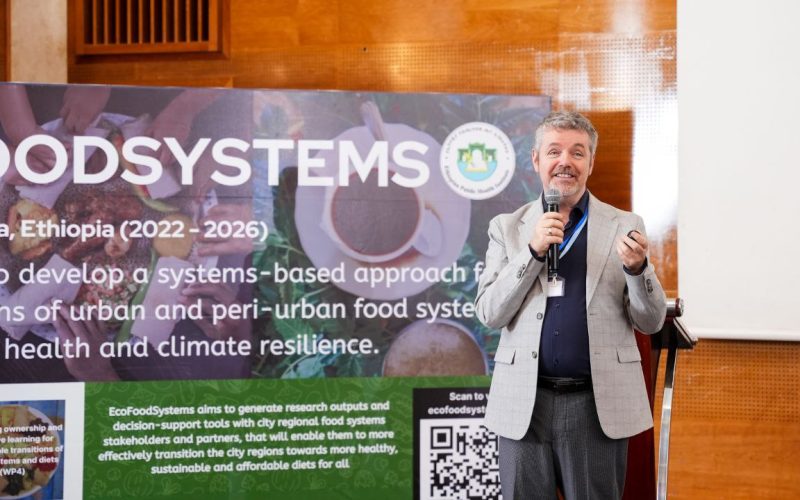
Eco Food System: Addressing Nutrition Deficiencies in Addis Ababa
A new program called the “Eco Food System” has been launched with the goal of creating a healthy and sustainable food system.
This initiative is designed to study the issues of malnutrition and excessive dieting, which often lead to unnecessary obesity in Addis Ababa.
The program aims to establish a food system that can withstand the challenges posed by climate change and other related problems. Its benefits will directly impact the residents of Addis Ababa, providing them with access to healthier food options.
One of the key objectives of the program is to provide critical information to policymakers and relevant institutions regarding the current state of diets in urban areas, what improvements are needed, and to offer insights based on extensive research.
Dr. Masresha Tessema, the Director of Nutrition and Environmental Health at the Ethiopian Public Health Institute, emphasized that the project’s primary focus is to collect data while monitoring the state of diets in the city.
In addition, Dr. Tessema revealed that a comprehensive study will be conducted to assess the current status of the food system in Addis Ababa, identify areas for improvement, and explore other related ideas that could enhance the food environment.
This project, which seeks to address nutritional deficiencies in a sustainable way, is being carried out in partnership with the Ethiopian Public Health Institute and is being led by the University of Galway.
Funding for the program comes from the European Union and the International Fund for Agricultural Development (IFAD). The initiative aims to ensure that residents of Addis Ababa have access to healthy, sustainable, and affordable food.
Once the project is fully implemented, it is hoped that it will help correct the existing nutritional deficiencies in Addis Ababa. Furthermore, the program has plans to expand its scope to other cities in Ethiopia in the years to come.
Stakeholders in Ethiopia’s food system have come together to explore strategies for making diets in Addis Ababa healthier, more affordable, and sustainable.
The EcoFoodSystems workshop, led by the University of Galway and in partnership with Wageningen University and Research (WUR), Rikolto, and the Ethiopian Public Health Institute, is funded by the European Union and IFAD.
The workshop’s goal is to conduct prioritized research with food systems partners to promote healthier, more sustainable, and affordable diets in Addis Ababa.
The workshop specifically focuses on the needs of nutritionally marginalized consumers in the city, employing a participatory approach that involves food system stakeholders.
This collaborative approach helps prioritize key research topics and develop decision-support tools necessary to accelerate progress in addressing nutritional challenges.
The EcoFoodSystems project, which is led by the University of Galway in collaboration with Wageningen University and Research (WUR) and Rikolto, aims to tackle the dual challenges of malnutrition and unsustainable food systems.
As urbanization accelerates, with an estimated 70% of the global population expected to live in cities by 2050, urban areas like Addis Ababa are becoming critical hubs for driving dietary changes and influencing agricultural practices.
Addis Ababa’s food system spans both rural and urban areas, involving actors across the entire supply chain—from farmers and traders to processors, retailers, and consumers.
A central goal of the project is to conduct research that will inform strategies to combat both malnutrition and overnutrition, which disproportionately affect marginalized communities in the city.
malnutrition hinders the growth and cognitive development of children, while overnutrition leads to a rise in chronic illnesses such as diabetes and heart disease among adults.
Together, these twin burdens of malnutrition contribute to a health crisis that strains public resources and impedes economic progress.
The research conducted through this program will focus on delivering diets that are not only healthier and more affordable but also sustainable, resilient to climate shocks, and able to adapt to other disruptions in the food system.
The workshop was attended by several key figures, including Dr. Masresha Tessema from the Ethiopian Public Health Institute, Mrs. Hiwot Darsane from the Federal Ministry of Health, Mr. Roberto Schiliro, Head of Cooperation at the European Union Delegation to Ethiopia, and Viviane Filippi from IFAD.
Ultimately, the project is dedicated to conducting research that empowers organizations and stakeholders to make informed decisions, leading to healthier, more sustainable, and affordable diets for marginalized consumers in the Addis Ababa city region.
