
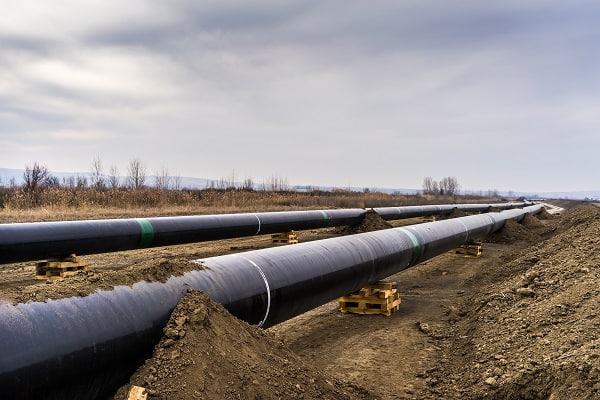
Ethiopia Cancels Ogaden Natural Gas Export Plan Due to Lack of Funding
The Ethiopian government has officially canceled its long-anticipated plan to export natural gas from the Ogaden Basin via a pipeline through Djibouti, citing financing challenges and repeated delays in implementation.
The decision was confirmed in the Ethiopian Energy Outlook 2025, a strategic policy document jointly prepared by the Ministry of Water and Energy, Ethiopian Electric Power, Ethiopian Electric Utility, and the Petroleum and Energy Authority.
The cancellation marks a major shift in the country’s energy strategy and signals a reorientation toward meeting domestic energy demands rather than focusing on exports, The Reporter newspaper reported.
According to the document, “The Ethiopian government has canceled a planned natural gas extraction project in the Ogaden area in Somali region and the associated pipeline to Djibouti for natural gas export,” due to “problems in securing project financing and delays in project implementation.”
The 767-kilometer pipeline project—intended to transport 460 petajoules of gas per year, or roughly 25 percent of Ethiopia’s total final energy demand—was quietly shelved in early 2022, though the confirmation has only recently been made public.
The project originally stemmed from a February 2019 memorandum of understanding signed between Ethiopia and Djibouti.
Under the agreement, a $4 billion pipeline was to be constructed to transport natural gas from Ethiopia’s Hilala and Calub gas fields, located in the Somali Regional State, to a new port terminal east of Djibouti City.
The pipeline was to be built and operated by Chinese energy conglomerate GCL-Poly, which had also been developing the gas fields.
The plan envisioned transporting 12 billion cubic meters of gas per year, of which 10 billion cubic meters would be exported to China. At the time, GCL-Poly had projected that exports would begin by 2021.
Ethiopia’s Parliament approved the pipeline’s construction in December 2019, while Djibouti had plans to construct an LNG terminal in Damerdjog to handle the exports.
However, despite these ambitious plans, progress on the pipeline stalled. While Prime Minister Abiy Ahmed recently stated during a meeting with media and communication professionals that Ethiopia would begin selling natural gas for the first time in its history starting September 2025, conflicting reports followed soon after. It was reported that construction of the pipeline, which was expected to serve as the main export route for Ethiopian gas, had been suspended.
For years, the Ethiopian government has claimed significant oil and gas reserves in the Ogaden area. Chinese firm PolyGCL has been engaged in exploratory and preparatory work to extract these resources. However, the lack of progress in export infrastructure has now cast doubt over the viability of commercial-scale exports in the near future.
Currently, Ethiopia is entirely dependent on imports to meet its oil and gas needs, spending over $4 billion annually on petroleum products.
The government has long subsidized fuel prices for domestic consumers, but in July 2025, it is expected to fully remove these subsidies. Going forward, local fuel prices will be aligned with international market rates, potentially increasing costs for Ethiopian consumers.
