
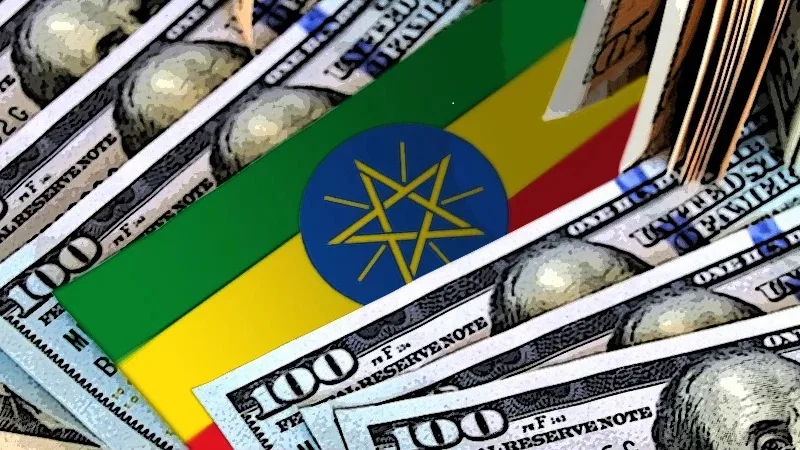
Ethiopian Economics Association Reports Decline in Foreign Aid to Ethiopia
The Ethiopian Economics Association (EEA) has revealed that Ethiopia’s foreign aid has significantly declined over the past two years.
According to a recent study conducted by the association, the amount of aid provided by four major donors—France, Germany, the United Kingdom, and the United States—has decreased for three consecutive years.
The study was presented during a discussion forum organized by the EEA, which regularly contributes research and policy recommendations aimed at strengthening Ethiopia’s economy.
The discussion focused on the country’s growing foreign debt burden and the continuing decline in international assistance.
Researchers and scholars highlighted that the reduction in foreign aid has placed mounting pressure on Ethiopia’s economy, particularly in social and development sectors.
They discussed the broader impacts of this decline, including challenges affecting children’s welfare, women’s empowerment, youth entrepreneurship, and financial inclusion.
Dr. Addis Kassahun, Vice President of the Ethiopian Economics Association, noted that international aid to Ethiopia has dropped sharply over the past two years, declining by an estimated 9 to 17 percent.
He emphasized that this decline has already had visible economic repercussions.
The study further noted that while the Ethiopian government maintains that its tight monetary policy has helped reduce inflation, increase foreign exchange reserves, and improve macroeconomic stability, the reduction in foreign aid has limited the country’s fiscal space and affected ongoing development programs.
Ethiopia is currently the second-largest recipient of financial assistance from the United States Agency for International Development (USAID), following Ukraine.
However, since the administration of former U.S. President Donald Trump, USAID has significantly scaled back its programs in Ethiopia, maintaining only emergency humanitarian and human rights assistance.
As a result, many civil society organizations in Ethiopia have faced serious operational challenges, including staff layoffs, program suspensions, and in some cases, complete closure, according to a report by the Ethiopian Civil Society Organizations Council.
In response to the growing humanitarian needs and the reduction in international aid, the Ethiopian government has established EthioAid, a national organization designed to mobilize local resources and support citizens affected by economic hardship and displacement.
Meanwhile, the Director-General of the UN Refugee Agency, Teiba Hassan, stated at a recent meeting in Geneva that the decline in donor support for refugees in Ethiopia is a serious concern.
She added that Ethiopia has been receiving an increasing number of South Sudanese refugees despite the lack of sufficient international assistance.
Teiba further noted that the past year has been particularly challenging for Ethiopia.
In addition to refugees from South Sudan, the country is currently hosting around one million refugees from Eritrea, Somalia, Syria, Yemen, and other nations.
