
Ethiopia Deepens Economic Ties With Russia Through Major Investment and Technology Agreements
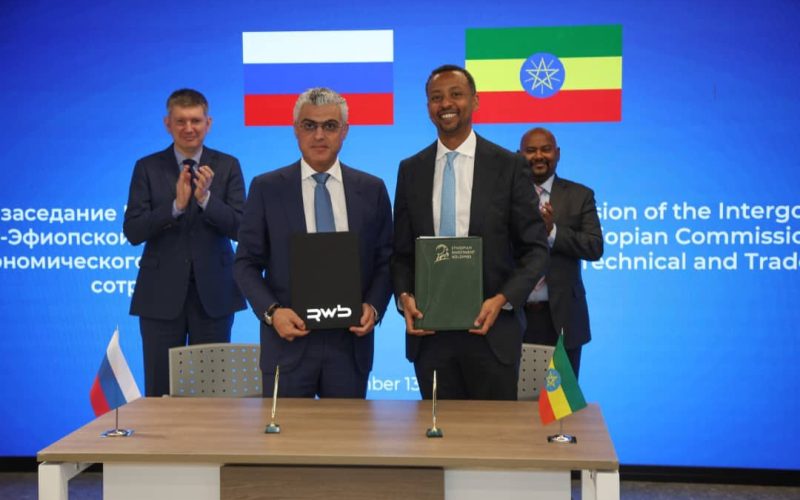
Ethiopian Investment Holdings (EIH) has signed two major Memoranda of Understanding (MoUs) with Russian companies Wildberries and Rusal, marking significant steps toward strengthening Ethiopia’s digital economy, industrial capacity, and broader economic partnership with Russia.
The first agreement, signed in Moscow between EIH CEO Brook Taye and Wildberries CEO Robert Mirzoyan, aims to support the entry of Eurasia’s largest digital marketplace into Ethiopia and the wider African market.
The MoU outlines collaborative work to tailor the Wildberries platform to Ethiopian consumers and sellers, while also advancing investment and technological initiatives that enhance logistics, digital infrastructure, and e-commerce capabilities in the country.
EIH said Wildberries’ expansion aligns with its mandate to attract high-quality global partners and promote diversification across strategic sectors.
The cooperation is expected to stimulate innovation, accelerate digital transformation, and boost Ethiopia’s competitiveness in the global digital marketplace.
In a separate deal, EIH announced an MoU with Rusal, one of the world’s leading producers of low-carbon aluminum, to develop a large-scale aluminum smelter in Ethiopia.
The first phase of the project is estimated at $1 billion, with an intended annual production capacity of 500,000 metric tons of aluminum.
According to EIH, the planned smelter is designed to meet Ethiopia’s growing domestic aluminum demand while significantly reducing foreign exchange expenditures on imports.
The project is expected to be completed within three to four years, and the plant could generate industrial value for up to 50 years.
About 70% of the first-phase financing is anticipated to come from lenders who have already expressed interest.
Following the agreement, the two sides established a joint technical committee to oversee project development. Preparatory work—such as site selection and a comprehensive feasibility study—has already begun to ensure timely progress.
These developments come amid rapidly expanding ties between Addis Ababa and Moscow.
Ethiopia and Russia, both BRICS members, have stepped up cooperation in recent months.
During a visit to Moscow in September 2025, Prime Minister Abiy Ahmed signed an MoU to build a nuclear power plant in Ethiopia.
In February 2025, Ethiopia, Nigeria, and Tunisia also agreed with Russia to conduct bilateral trade in their national currencies a move aligned with Moscow’s strategy to expand non-dollar trade mechanisms following Western sanctions related to the war in Ukraine.
Economic cooperation between the two nations is also extending into the transport sector.
The President of the Ethiopian Transport Employers Federation, Berhane Zeru, announced in March, 2025, that Ethiopia is preparing to import 5,000 modern Russian-made vehicles.
The vehicles are equipped with Euro 5 engines, which offer reduced emissions and improved environmental performance.
By contrast, most vehicles currently operating in Ethiopia run on older Euro 2 and Euro 3 engines, which are less environmentally friendly.
Taken together, the new investments and agreements signal accelerating economic integration between Ethiopia and Russia across technology, industry, energy, and transport areas that Ethiopia views as vital to its long-term development goals.
