
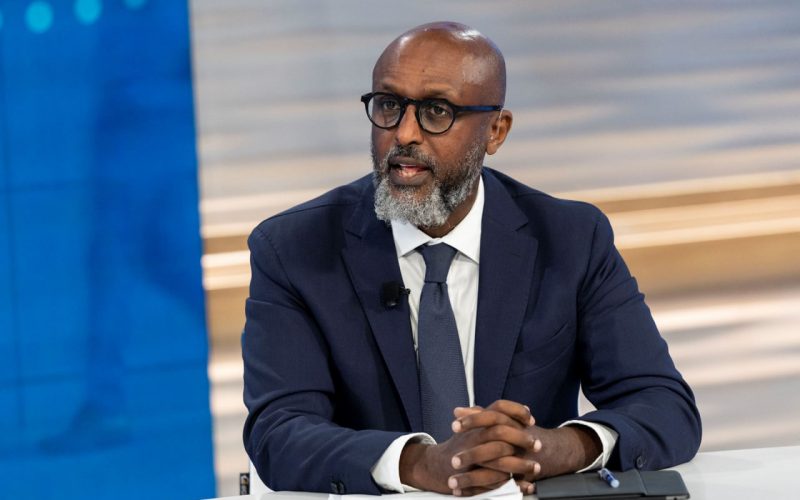
IMF Africa Director Abebe Selassie to Step Down in 2026 After Three Decades of Service
The International Monetary Fund (IMF) has announced that Abebe Aemro Selassie, Director of its African Department, will retire on May 1, 2026, ending a 32-year career at the global financial institution marked by deep engagement with sub-Saharan Africa during some of its most challenging economic periods.
IMF Managing Director Kristalina Georgieva praised Selassie’s leadership, noting that since assuming the role in 2016 he has guided the Fund’s work across 45 sub-Saharan African countries amid unprecedented global and regional shocks.
These included the COVID-19 pandemic, surging inflation, growing debt vulnerabilities, and major shifts in global trade and financial conditions.
Under Selassie’s tenure, the IMF expanded its lending, policy advice, and technical assistance to African countries, responding to increased demand for financial support while tailoring programs to the region’s diverse economic realities.
Georgieva said he played a key role in strengthening the IMF’s partnership with African member states and championed customized policy advice and capacity development, particularly for fragile and conflict-affected countries.
Selassie also helped mobilize additional resources for low-income countries, including through the Poverty Reduction and Growth Trust (PRGT), and worked to improve collaboration across IMF departments on critical issues such as debt resolution, economic resilience, and shock preparedness.
During his leadership, the IMF added a 25th chair to its Executive Board, increasing representation for sub-Saharan Africa.
An Ethiopian national, Selassie joined the IMF in 1994 and held a range of senior positions over more than two decades before becoming Director of the African Department.
His roles included Deputy Director in AFR, Mission Chief for Portugal and South Africa, Division Chief of the African Department’s Regional Studies Division, and Senior Resident Representative in Uganda.
Earlier in his career, he worked on IMF programs in Turkey, Thailand, Romania, and Estonia, and contributed extensively to policy development, operational reviews, and economic research.
Before joining the IMF, Selassie worked for the Government of Ethiopia and the Economist Intelligence Unit in London. He completed his graduate studies at the London School of Economics.
Georgieva said Selassie’s legacy reflects Africa’s aspirations for good governance, strong and inclusive economies, and long-term prosperity, particularly for the continent’s youth. She described his leadership, diplomacy, and strategic vision as having left a lasting impact on the IMF’s work in Africa.
