
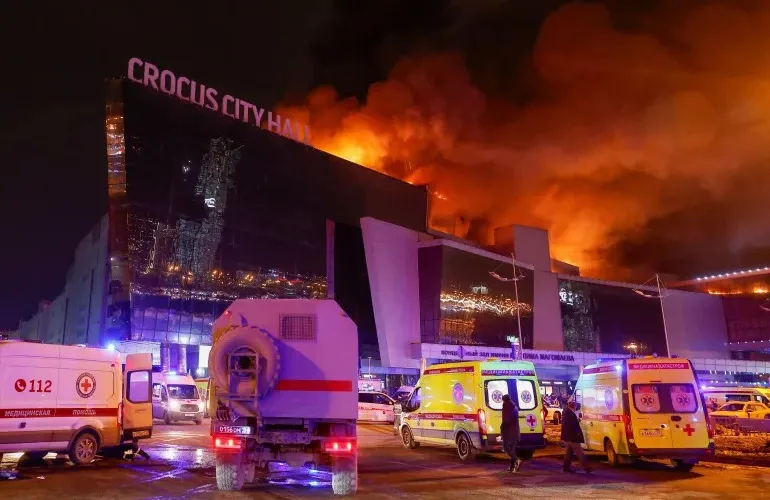
On March 22, 2024, tragedy struck Moscow, Russia, as gunmen launched a brazen assault on a music party held at Crocus City Hall, leaving a trail of devastation in their wake.
The assailants, armed with automatic weapons and explosives, mercilessly targeted innocent attendees, resulting in a staggering death toll surpassing 115, with over 145 individuals sustaining injuries.
In the aftermath of this heinous act, Ethiopia swiftly denounced the atrocity, expressing solidarity with the Russian people and government.
In a solemn declaration issued by the Ministry of Foreign Affairs, Ethiopia vehemently condemned the barbaric assault, labeling it as a despicable act of terrorism against civilians.
The statement, released on behalf of the Ethiopian government, conveyed heartfelt condolences to the victims of the attack while extending prayers for solace to the bereaved families and the Russian authorities grappling with the aftermath.
Highlighting the global menace posed by terrorism, Ethiopia emphasized the imperative for concerted international efforts to thwart such senseless loss of innocent lives.
The government underscored its unwavering support for the Russian Federation, reaffirming its commitment to stand shoulder to shoulder with the people of Russia during these trying times.
Furthermore, Ethiopia announced its readiness to collaborate with Russia in combating terrorism, underscoring the need for unified action on a global scale to eradicate this scourge.
This pledge of solidarity was reciprocated by Russia, which vowed full support for Ethiopia’s endeavors in countering terrorist threats within its borders.
As the international community recoiled in horror at the brazen attack, condemnation poured in from around the world, with numerous nations expressing solidarity with Russia in the face of terrorism.
However, amidst the global outcry, the Islamic State (IS) claimed responsibility for the assault, attributing it to its Korsan Province operating in Afghanistan.
In the ensuing aftermath, speculation and accusations swirled, with some Russian officials pointing fingers at Ukraine in the absence of concrete evidence.
However, Ukrainian authorities vehemently denied any involvement, asserting their commitment to resolving conflicts through diplomatic channels rather than resorting to terrorism.
In a significant development, Russian law enforcement swiftly apprehended four primary suspects implicated in the attack.
The suspects, attempting to flee the scene, were intercepted by authorities while attempting to cross the Ukrainian border in a vehicle allegedly procured for their nefarious mission.
As investigations unfold, additional arrests have been made, bringing the total number of suspects in custody to 11.
Meanwhile, revelations have emerged that the United States had issued a warning regarding a potential terrorist threat in Moscow two weeks prior, prompting scrutiny over the adequacy of intelligence sharing.
In response to assertions by Russia regarding the lack of actionable intelligence, the White House spokesperson reiterated that the United States had no prior knowledge of the specific attack.
Amidst the unfolding investigation and diplomatic exchanges, the international community remains united in its condemnation of terrorism, underscoring the imperative for collaborative efforts to combat this global scourge.
