
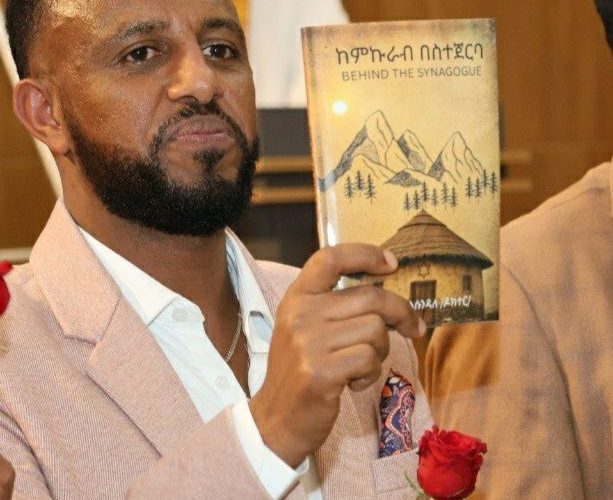
A new historical novel, Behind the Synagogue (Kemkurabu Besterjerba), exploring the history, identity, and social struggles of Ethiopia’s Israel community, was officially launched in Addis Ababa.
Written by Dr. Yosiyas Esundale, the novel is based on his doctoral research and combines historical facts with fiction to shed light on the experiences of the Israel community, which was historically referred to as Bale-ijoch (craftsmen) in Ethiopian society.
The story follows Abate, a young scholar searching for his identity while uncovering the history of the Kechene synagogue and the untold experiences surrounding Operation Moses, the historic migration of Ethiopian Jews to Israel. The narrative spans Addis Ababa’s Kechene and Gullele neighborhoods as well as Merhabete.
Speaking at the book launch held at Stay Easy Plaza, language advisor Dr. Zelalem Girma said the novel vividly portrays old Addis Ababa and addresses the lasting psychological impact of derogatory terms such as “Falasha” and “Kayla,” which were historically used against members of the Bete Israel community.
The launch was attended by prominent writers, religious leaders, and community representatives, including author and poet Kefelegn Zelelew, Megabi Dr. Seleshi Kebede, developer Solomon Assefa, Megabi Demiss Mamo, and Selihom Organization founder Mikiyas Legesse.
During the event, Dr. Esundale also celebrated his parents’ 55th wedding anniversary by presenting them with traditional Kabba capes, reflecting a similar tribute in the novel to the enduring marriage of two central characters.
Literary reviewers praised Behind the Synagogue for blending historical research with compelling storytelling. They said the novel not only documents the history and cultural heritage of the Beta Israel community but also confronts social exclusion and identity-based discrimination through themes of resilience, justice, and reconciliation.
Reviewers described the publication as an important contribution to Ethiopian literature and social history, preserving the experiences, migration stories, and religious heritage of a community whose history has often remained overlooked.
