
Ethiopia Sends First 12 Health Professionals to Barbados Under New Bilateral Agreement
Ethiopia has begun sending health professionals to Barbados under a government-to-government arrangement aimed at creating legal employment opportunities, strengthening health workforce cooperation and supporting the Caribbean country’s healthcare system.
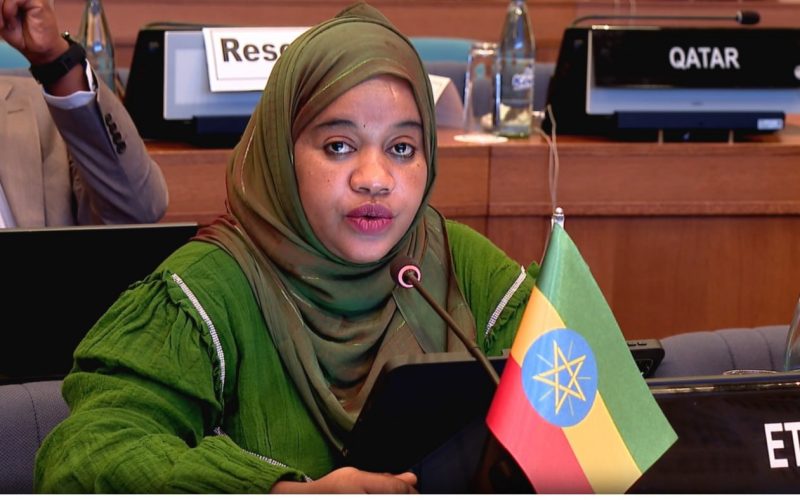
State Minister of Health Sahrela Abdullahi said 12 Ethiopian health professionals have been sent to Barbados and signed two-year employment contracts. She said the two governments have agreed on working and payment arrangements for the professionals.
The deployment marks a new phase in health workforce cooperation between the two countries. In May 2026, Ethiopia and Barbados signed a memorandum of understanding establishing a framework for health workforce mobility and ethical recruitment.
The agreement covers the recruitment of Ethiopian doctors, nurses, midwives, pharmacists and dental professionals, while also providing for skills exchange and capacity building.
The first group of Ethiopian health professionals began arriving in Barbados in August, according to Caribbean and regional health-sector reports, putting the bilateral agreement into operation.
Sahrela said organized overseas employment can create opportunities for Ethiopian professionals while helping the government manage labour migration through legal channels.
“Sending health professionals abroad in a legal and organized manner creates job opportunities; it also helps to manage professional migration in an orderly manner,” she said.
She noted that shortages of health professionals and unemployment coexist in many African countries. Greater cooperation in training, professional licensing and recognition of qualifications, she said, could help professionals move between countries more easily.
“The lack of uniformity in training and professional licensing systems has been a barrier to professionals,” Sahrela said, adding that Ethiopia is strengthening bilateral cooperation to facilitate professional mobility and expand employment opportunities.
The Ethiopia-Barbados agreement is also framed as a South-South partnership. Barbados’ Ministry of Health and Wellness said the arrangement is intended to support ethical recruitment, transparency, mutual benefit and health-system resilience in both countries.
The Barbados deployment comes as Ethiopia expands its efforts to create structured overseas employment opportunities for trained and semi-skilled workers.
The Ministry of Labor and Skills reported in March 2026 that 447,100 Ethiopians had been sent abroad for employment during the first half of the fiscal year, exceeding the government’s target of 435,400.
Ethiopia has traditionally sent large numbers of workers to Middle Eastern countries, including Saudi Arabia, the United Arab Emirates, Jordan, Lebanon, Kuwait and Qatar. The government is now seeking to expand destinations and move toward more skilled and regulated labour migration.
In October 2025, Ethiopia and Italy signed an agreement on migration and mobility, followed by the launch of a Global Skill Partnership in April 2026 aimed at improving Ethiopian workers’ skills and expanding safe and legal migration pathways to Italy.
The government has also been pursuing additional labour agreements and employment opportunities in countries including Iraq and Oman, while discussions have been held with companies in the United Kingdom regarding opportunities for skilled Ethiopian workers.
Healthcare is emerging as one of the key sectors in Ethiopia’s overseas employment strategy, with demand for nurses, doctors and other health professionals increasing in international labour markets.
The Barbados agreement specifically provides for the recruitment of Ethiopian professionals across several healthcare disciplines. Barbados officials have said specialist Ethiopian doctors and nurses are expected to help address staffing shortages in the country’s public health system.
For Ethiopia, the government sees managed professional migration as a way to turn the country’s expanding pool of trained workers into employment opportunities while ensuring that recruitment takes place through formal agreements rather than irregular channels.
The approach also comes as Ethiopia works to expand and improve its domestic health workforce. The Ministry of Health has highlighted medical education, continuous professional development, residency training and other initiatives as part of efforts to increase the number, accessibility and quality of health professionals.
The health workforce agreement also builds on growing diplomatic relations between Ethiopia and Barbados. Barbados Prime Minister Mia Amor Mottley has visited Ethiopia twice, while leaders from both countries have promoted closer cooperation between Africa and the Caribbean.
The May 2026 health agreement was signed on the sidelines of the 79th World Health Assembly in Geneva by Ethiopian Health Minister Dr. Mekdes Daba Feyssa and Barbados Health and Wellness Minister Lisa Cummins. Both governments described the agreement as a framework for ethical health-worker mobility, professional cooperation and knowledge transfer.
The arrival of the first 12 professionals therefore represents more than an overseas employment arrangement: it is the first practical implementation of a broader bilateral framework intended to link Ethiopia’s health workforce with international demand while promoting regulated and mutually beneficial professional mobility.
