
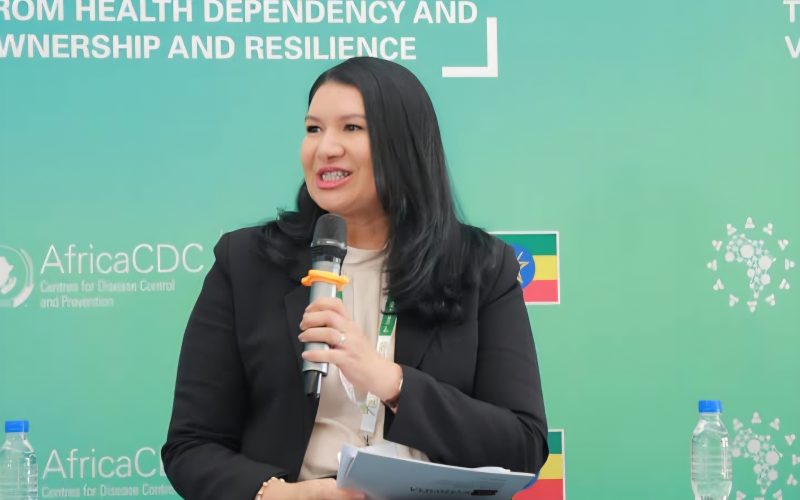
African governments must increase domestic healthcare financing and overhaul the global debt system to build resilient health systems amid a sharp decline in foreign development assistance, a senior health advocate has warned.
Dr. Penninah Iutung, Executive Vice President for Global Affairs at the AIDS Healthcare Foundation (AHF), said Africa could no longer rely heavily on external funding to finance its public health systems and must prioritize healthcare as a matter of national security.
Speaking in an interview, Iutung said African countries had depended on official development assistance (ODA) for more than 25 years, leaving their health systems vulnerable to changes in international funding priorities.
She cited figures indicating that health-related development assistance had declined by approximately 70 percent, creating significant financing gaps across the continent.
“We are at a critical moment where we must finance our own health system and make sure that we are resilient,” she said.
Iutung argued that governments must move beyond political commitments and allocate sufficient domestic resources to healthcare, emphasizing that a healthy population is fundamental to economic development.
She pointed to the COVID-19 pandemic as evidence of how public health emergencies can undermine national economies, disrupt economic activities and reverse development gains.
To strengthen domestic financing, she urged African countries to expand national health insurance schemes and establish protected healthcare budgets that cannot easily be diverted to other government priorities.
“Money for health must be ring-fenced and kept for health. It must not be redistributed when the need arises,” she said.
She also called for greater investment in healthcare infrastructure, medical supplies and human resources, warning that inadequate salaries and poor working conditions continue to drive skilled health professionals out of the continent.
According to Iutung, retaining qualified health workers is essential to strengthening Africa’s capacity to respond to epidemics and other public health challenges.
Beyond domestic financing, she said Africa’s ability to fund healthcare is constrained by an unequal global financial architecture that exposes developing countries to higher borrowing costs and unsustainable debt burdens.
“The global health architecture is rigged against the South. It’s totally rigged. It’s unfair,” she said.
She argued that some African countries inherited colonial-era debts accumulated to finance infrastructure that primarily served the economic interests of colonial powers.
Iutung called for a comprehensive overhaul of the global debt architecture, arguing that African countries should have a stronger voice in international financial negotiations and benefit from fairer borrowing conditions.
She cited borrowing rates of approximately 1.9 percent in developed countries compared with 5.6 percent in many developing countries, saying the disparity places African economies at a disadvantage.
She warned that debt servicing is consuming resources that could otherwise support healthcare, education and other essential public services. Austerity measures, she added, often disproportionately affect social sectors.
To address the problem, she urged African countries to negotiate collectively through a common African position and welcomed the African Union’s initiative to establish a borrowers’ forum.
She also proposed establishing an African credit rating agency to assess the continent’s economic and financial conditions rather than relying exclusively on international rating institutions based in the Global North.
Additionally, she called for debt swaps and temporary suspension of debt repayments during major health emergencies to allow governments to redirect resources toward responding to outbreaks.
