
By Samuel Abate
Study Reveals Gaps in Digital Public Infrastructure Coverage Across East Africa
A new regional study has revealed that media coverage of digital public infrastructure (DPI) and digital public goods (DPG) in East Africa remains shallow, event-driven, and heavily dominated by government voices, leaving out critical issues of governance, accountability, and citizens’ rights.
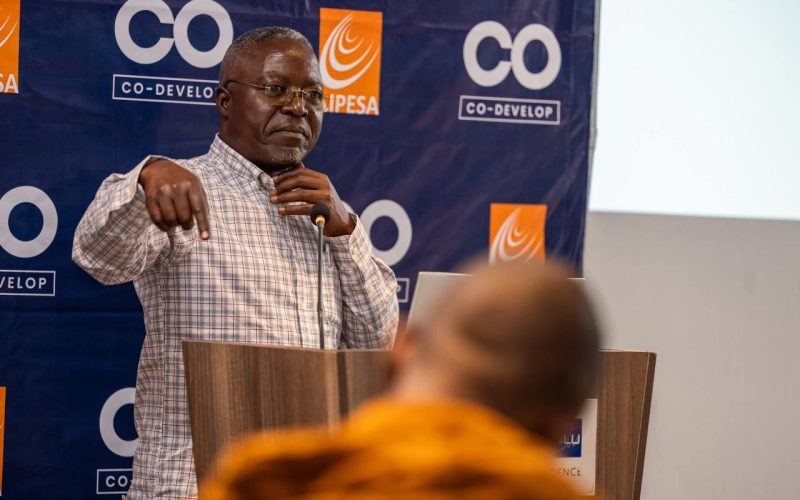
The research conducted by the Collaboration on International ICT Policy for East and Southern Africa (CIPESA) and presented by its Chief of Staff Dr. Peter G. Mwesige, analyzed DPI reporting across nine East African countries.
The study examined story volumes, placement, themes, and sources to assess how effectively journalists cover emerging digital systems such as digital IDs, payment platforms, and data exchange technologies in 2024 alone.
The study covers DPI and DPG news coverages in Ethiopia, Kenya, Rwanda, Somalia, Uganda, DR Congo, South Sudan, Burundi and Tanzania
According to the findings, Kenya and Tanzania accounted for nearly 60 percent of all DPI-related stories, while coverage in South Sudan, Uganda, and Rwanda lagged significantly behind.
“The uneven maturity of digital ecosystems across the region has created information gaps,” Dr. Mwesige said. “Public awareness about DPI varies widely because media attention is concentrated in a few countries.”
The report found that most stories focused on the functional aspects of DPI such as service delivery and technology deployment while issues of data governance, inclusion, and privacy received little attention.
“Media are reporting digital transformation, but not interrogating who designs these systems, who is included or excluded, and how citizens’ rights are being affected,” Dr. Mwesige explained.
Nearly 80 percent of all DPI stories were published beyond page three in newspapers, indicating limited editorial prioritization.
Moreover, nine out of ten stories were conventional “hard news” pieces derived from official events or press releases, with minimal investigative or analytical reporting.
Government officials accounted for over 55 percent of quoted sources, while civil society representatives, independent experts, and ordinary citizens were largely excluded.
Women’s voices were also severely underrepresented, with only five percent of sources in Ethiopian stories being female.
Experts at the panel discussion emphasized the need to build journalistic capacity around digital transformation. Benon Herbert Oluka from the African Investigative Journalism Conference noted that the complexity of DPI demands specialized reporting.
“We cannot expect journalists to be jacks of all trades,” he said. “We need specialized reporters who understand digital systems, governance, and data rights.”
Oluka urged media houses to support niche journalism through training, fellowships, and grants that enable reporters to pursue in-depth stories on digital technologies.
Africa Digital Impact Alliance (ADIA) director Diana Sang highlighted that most DPI narratives in Africa are still shaped by global institutions and foreign media. She criticized the lack of contextual reporting that reflects Africa’s diversity.
“Africa is not one country,” she said. “The DPI story in Kenya cannot be the same as in Chad or Djibouti, where internet connectivity is still below 20 percent. We need local perspectives that reflect each country’s realities.”
Dina also called for greater attention to governance, accountability, and citizen redress mechanisms within digital systems. “When someone’s digital ID fails or data is misused, who do they turn to? That’s where the real DPI story lies,” she added.
The panel highlighted Ethiopia’s “Fayida” Digital ID and Uganda’s NIRA system as leading examples of locally developed platforms running on the open-source Modular Open Source Identity Platform (MOSIP). The systems are praised for enabling digital identification without over-collecting personal data such as ethnicity or health details.
Experts urged journalists to investigate and tell these African success stories instead of relying on narratives dominated by India or Europe.
Robert Karanja of Co-Develop stressed that African journalists must reclaim the continent’s digital transformation narrative.
“Until the lion learns to write its own story, the tale will always glorify the hunter,” he said, urging reporters to tell Africa’s DPI stories from African perspectives.
He added that despite significant digital advancements, African media often lack the depth to explain how digital systems intersect with rights, economics, and governance.
The study concludes that while East African media have made progress in covering digital transformation, they are failing to connect these developments to broader social, political, and economic realities.
CIPESA and its partners are calling for training programs, media fellowships, and newsroom investments to strengthen digital journalism and investigative reporting.
“If we do not build capacity to tell these stories well,” Dr. Mwesige warned, “the digital transformation in Africa risks becoming a story told by the elite for the elite.”
