
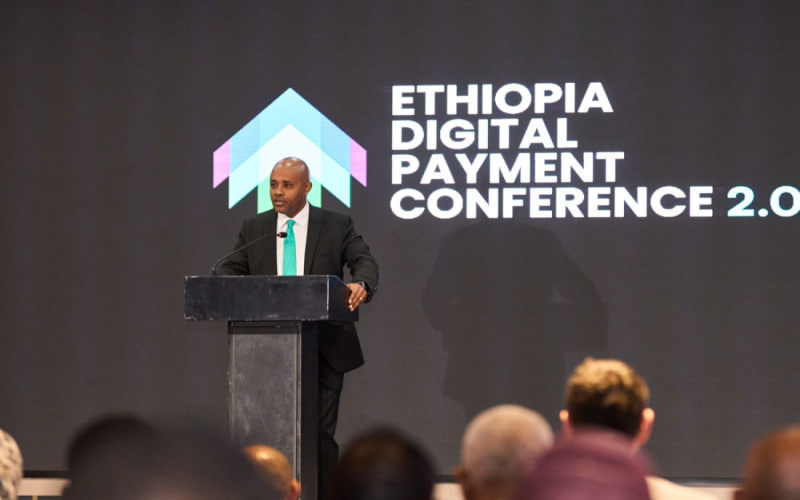
Ethiopia Targets 75% Digital Transactions in Five Years as Annual Digital Payments Hit 18.5 Trillion Birr
Ethiopia plans to shift three-quarters of all financial transactions to digital platforms within the next five years, the National Bank of Ethiopia (NBE) announced as it unveiled its National Digital Payment Strategy 2026–2030 during the Ethiopian Digital Payment Conference 2.0.
The central bank revealed that 18.5 trillion birr was processed through digital payment channels in the 2024/25 fiscal year alone, reflecting the country’s rapidly evolving digital finance landscape.
The new strategy builds on the first National Digital Payment Strategy (2021–2024), which focused on strengthening legislation, authorizing new service providers, enhancing regulatory oversight, and expanding digital infrastructure.
According to Solomon Damtew, Director of Payment Systems at NBE, the next phase aims to accelerate economic growth by ensuring fast, efficient, and affordable money transfers across the country.
“Modernizing the digital payment system and expanding digital infrastructure is critical for supporting Ethiopia’s economic transformation,” Solomon told Ethio Negari.
Solomon noted that Ethiopia’s economy still relies heavily on cash, a trend the new strategy intends to change.
The central bank aims for 75% of all transactions to be conducted digitally by 2030.
He added that closing the gender gap in digital finance is a key priority. Currently, there is a 24% gap in the use of digital payment systems between men and women.
The NBE plans to reduce this gap to 3% within five years by expanding access and tailored services for women.
The new strategy comes on the heels of significant progress over the past decade, as documented in NBE’s recent report, Ethiopia’s Digital Payments Performance.
The report highlights major reforms and investments that have transformed Ethiopia’s payment ecosystem since 2011.
Key milestones in Ethiopia’s digital payment transformation include the launch of the Payment System Modernization Program in 2011, which laid the foundation for modernizing the national financial infrastructure.
This was followed by reforms to the National Payment System and Banking Proclamations, creating an enabling regulatory environment for innovation.
The introduction of EthSwitch played a critical role by enabling interoperability among banks and mobile money platforms.
Ethiopia further expanded its digital ecosystem by licensing non-bank digital financial service providers, including Telebirr in 2021 and M-PESA in 2023.
The country has also adopted global standards such as ISO 20022 and rolled out a unified QR code system to streamline transactions.
Most recently, the development of instant payment capabilities has accelerated Ethiopia’s progress toward a real-time, integrated digital economy.
By June 2023, Ethiopia had registered more than 102.8 million digital accounts, with mobile money usage increasing fourfold in just three years.
Digital access points including ATMs, POS machines, and mobile money agents expanded to over 238,000 nationwide, reflecting strong infrastructure development.
Digital channels continue to dominate transaction activity. The RTGS system processed 3.7 million transactions annually, worth 5 trillion birr with 99.9% uptime.
Mobile money, mobile banking, POS, and internet banking transactions all recorded strong growth. Digital transaction values surpassed those of traditional banking channels for the first time.
Interoperable digital payments reached 205.6 billion birr annually, supported by 11 active non-bank DFSPs.
The Ethiopian government has also made major strides in digitizing public services, fuel purchases are now fully digital and most utility payments have moved online.
Taxes, fines, and social protection payments including those in agriculture, health, and safety net programs are increasingly cashless.
Despite the progress, Ethiopia still faces obstacles in scaling digital finance, low adoption of merchant payments, limited rural digital access points, fraud risks and inadequate consumer protection mechanisms.
Low financial literacy, infrastructure gaps between urban and rural areas also another challenges.
The 2026–2030 strategy positions Ethiopia to build a trusted, integrated, and inclusive digital payment ecosystem by focusing on several key priorities.
These include expanding instant payment systems to ensure faster and more efficient transactions, strengthening cyber security and interoperability to enhance system reliability, and promoting gender-inclusive financial services to close existing usage gaps.
The strategy also aims to boost merchant acceptance of digital payments across the economy and leverage digital public infrastructure to support advanced financial services such as data-driven lending and digital remittances.
The National Bank of Ethiopia will guide this transformation through the forthcoming National Digital Payment Strategy 2.0, which aims to connect all Ethiopians to a secure and modern financial system.
By Samuel Abate
