
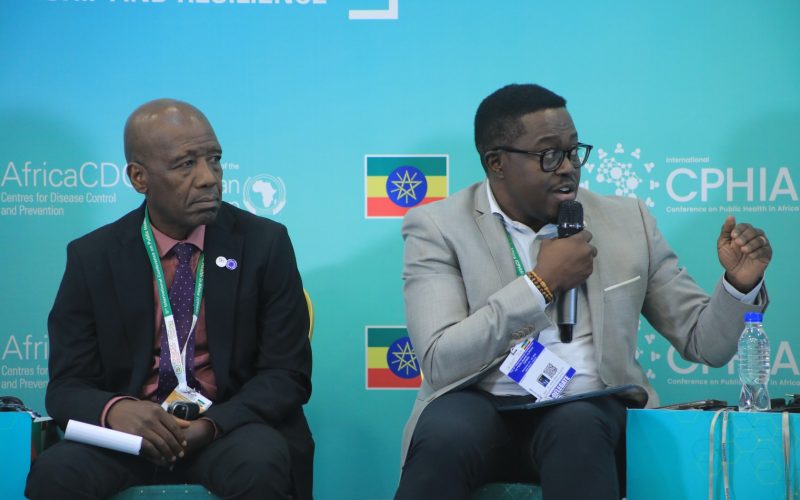
Africa has the scientific expertise, research institutions and pharmaceutical manufacturing capacity needed to produce medicines locally and reduce dependence on imports, but sustained financing, stronger coordination and political commitment remain critical to achieving pharmaceutical independence, health experts have said.
Dr. André-Marie Tchouatieu, Senior Director of Medical Affairs at Medicines for Malaria Venture (MMV), said African countries have developed significant capabilities across different stages of pharmaceutical research and development, including clinical trials, drug discovery and manufacturing.
Speaking in an interview with Capital following a panel discussion on pharmaceutical independence, Tchouatieu said Africa has made considerable progress in building the capacity required to develop medicines, although some gaps remain in preclinical research and animal studies.
He noted that African institutions are increasingly participating in clinical research, with phase one trials recently initiated in Rwanda, while phase two, three and four trials have already been conducted in different African countries.
“There are capacities that we need just to work with and develop together,” he said, adding that research institutions and pharmaceutical manufacturers across the continent have demonstrated their ability to contribute to medicine development and production.
Tchouatieu cited institutions such as H3G, based in Cape Town, South Africa, as examples of African research institutions with growing capabilities in discovering potential new drug molecules.
He also said pharmaceutical manufacturers in countries including Nigeria, Kenya and Uganda have demonstrated their ability to produce quality-assured medicines.
However, he identified sustainable financing as one of the major requirements for strengthening the continent’s pharmaceutical research and development capabilities.
According to him, African institutions need a continuous pipeline of research projects and adequate funding to maintain the expertise and infrastructure they have developed over the years.
He said the research agenda being developed through the Africa Centres for Disease Control and Prevention (Africa CDC) provides an opportunity to coordinate the continent’s research priorities and mobilize the resources needed to support them.
“The budget is critical,” he said, emphasizing the importance of aligning research priorities, funding and implementation under a coordinated approach.
Tchouatieu added that recent public health developments, particularly the COVID-19 pandemic and changes in international funding, have strengthened political commitment among African governments to develop more self-reliant pharmaceutical and health systems.
He said the continent needs to strengthen regulatory systems, financing mechanisms and cooperation among countries to establish an integrated pharmaceutical industry covering drug discovery, development and manufacturing.
On Ethiopia’s efforts to expand local medicine production, Tchouatieu said countries should initially focus on producing medicines that address the largest share of their healthcare needs.
He pointed to the essential medicines list, which he said represents around 80 percent of the continent’s pharmaceutical requirements, as a potential starting point for local manufacturing.
He also emphasized the need for coordination among African countries to avoid unnecessary competition and create sustainable markets for pharmaceutical manufacturers.
For instance, he said Ethiopia could specialize in producing antibiotics while other countries develop capacity in different pharmaceutical products, allowing manufacturers to serve regional markets.
Meanwhile, Dr. Mathias Magoola, founder and managing director of Dei BioPharma Ltd and the Dei Group in Uganda, said Africa’s pharmaceutical dependence is partly driven by fragmented markets and limited awareness of the manufacturing and research capabilities already available on the continent.
He called on African governments and the Africa CDC to assess and document the capabilities of pharmaceutical manufacturers and research institutions across the continent to promote collaboration and strengthen local procurement.
Magoola said African countries sometimes import medicines and vaccines from outside the continent without knowing that manufacturers in other African countries have the capacity to produce them.
He argued that better coordination and information-sharing would enable governments to source more medicines from African manufacturers and retain resources within the continent for investment in research and development.
“Assess the capabilities of African manufacturers. Assess the capabilities of those who are doing R&D,” he said, urging the Africa CDC to help bring manufacturers and research institutions together.
He also called for increased government investment in research and development and stronger support for the African Medicines Agency (AMA) to improve cooperation among pharmaceutical manufacturers and strengthen regulatory oversight.
According to Magoola, African countries have the potential to manufacture medicines and vaccines for both domestic consumption and international markets, provided governments recognize and support existing capabilities.
He cited Uganda’s efforts to expand local pharmaceutical and vaccine production as an example of the continent’s ambition to reduce dependence on imported medical products.
He said the country is working toward producing all medicines and vaccines locally in the coming years under the leadership of President Yoweri Museveni.
Both experts stressed that pharmaceutical independence will require more than establishing medicine factories. Sustained investment in research, clinical trials, manufacturing infrastructure, regulatory capacity and regional market integration will be essential to building a competitive pharmaceutical industry in Africa.
